Let's learn about Search Engine via these 158 free blog posts. They are ordered by HackerNoon reader engagement data. Visit the Learn Repo or LearnRepo.com to find the most read blog posts about any technology.
A search engine is a software system designed to search for information on the World Wide Web, identifying results relevant to a user's query. It is a fundamental tool for accessing information and navigating the vast digital landscape.
1. How To Scrape Google With Python
 Ever since Google Web Search API deprecation in 2011, I've been searching for an alternative. I need a way to get links from Google search into my Python script. So I made my own, and here is a quick guide on scraping Google searches with requests and Beautiful Soup.
2. How to Use Fuzzy Query Matches in Elasticsearch
 Typo is something that often happens and can reduce user’s experience, fortunately, Elasticsearch can handle it easily with Fuzzy Query.
3. The Best SEO is No SEO
 Always take content as priority.
4. Yelp's Mobile App Stability Soars to 99.98% with BugSnag
 Yelp's Mobile App Stability Soars to 99.98% with BugSnag. Here's how it was achieved.
5. AI Is Devouring E-Commerce
 AI is about to eat e-commerce: Here's why.
6. How To Master Elasticsearch Query DSL
 Photo by Evgeni Tcherkasski on Unsplash
7. Scrape Google Images with Node JS
 This tutorial will teach us to scrape Google Images with Node JS.
8. Ditching Google: the 3 Search Engines That Use AI to Give Results That are Meaningful
 If you’re the type that wants straight answers to every query without going through several blog posts, then you should consider AI-chat search engines.
9. What Is The Ultimate Search Engine For Developers - You.com vs Google vs DDG
 I wanted to compare You.com to DuckDuckGo (a popular and also privacy-oriented search engine) and Google, probably the default for most developers.
10. How to Implement Full-text Search in a Laravel Project
 In this article, I'll talk about what the problems with searching without full-text search are and how to implement such search
11. Optimizing SEO in Next.js: Techniques for Better Search Engine Visibility
 In this blog post, we will explore advanced techniques for optimizing SEO in Next.js to enhance search engine visibility and attract more organic traffic.
12. How to Build an AI-Search-Powered Personal Assistant App
 A search-powered personal assistant is a digital assistant that uses search engine technology to help users with various tasks. Here's how to make one.
13. Getting Started with the Weaviate Vector Search Engine
 Everybody who works with data in any way shape or form knows that one of the most important challenges is searching for the correct answers to your questions. There is a whole set of excellent (open source) search engines available but there is one thing that they can’t do, search and related data based on context.
14. GPT-4 and Stable Diffusion XL for $10/month: Is YouPro Worth It?
 With YouPro, the new YouChat provides more accurate and precise answers for more complex responses. YouImagine’s new Standard Diffusion XL is a great improvemen
15. Mastering SEO in the Era of Large Language Models: Evolving Tactics for LLM-Powered Search Engines
 How do you adapt your SEO tactics for LLM-powered search engines?
16. We Built A Search Engine With MeiliSearch and JavaScript: Here's How You Can Too
 Struggle to find the chemistry Nobel prize winner for 1979? Try out MeiliSearch's super-fast-search JavaScript tutorial to find Nobel prize winners in a matter of milliseconds. 🌬️
17. Understanding AI Search
 At Algolia, we’re also about to introduce our own AI-powered technology that uses neural hashing to scale intelligent search for any application.
18. An Introduction to the Power of Vector Search for Beginners
 An introduction to neural vector search, in comparison to keyword-based search.
19. Comparing Meilisearch and Manticore Search Using Key Benchmarks
 Both Manticore and Meilisearch position themselves as full-text search engines. The key element in full-text search engines is how they rank documents.
20. First Impressions of YouCode: The Search Engine for Programmers
 As a tech enthusiast and programmer, I love trying new platforms that attempt to reinvent the way we interact with computers, the internet, and each other. One of the most outdated yet crucial tools we interact with every day — the search engine — is due for disruption. Many companies recognize this and have tried to redesign and reinvent the search process. To stay at the forefront of this search engine revolution and take control over my search results, I experimented with several smaller search engines (most still in beta). One of the most innovative and curated alternative search engines is You.com. In my opinion, their recent release of YouCode has the potential to reshape how programmers interact with the internet, expedite problem solving, and enhance software design. Today I will be reviewing this novel search engine and discussing how I use it to improve my coding.
21. Search and Extract: Why This AI Pattern Matters, Tutorial, and Example
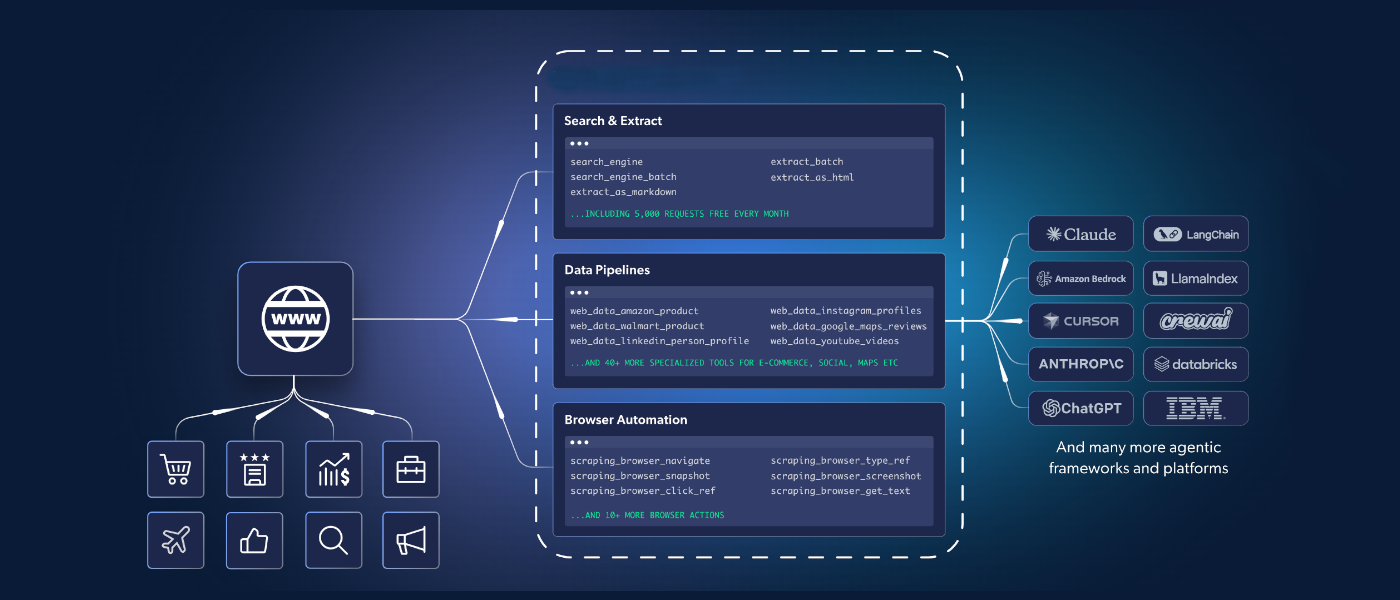 Learn why search-and-extract matters for AI enrichment and research. Step-by-step tutorial using SERP API, Web Unlocker, and Browser API with a real example.
22. How To Develop Your Custom Autocorrect Implementation with Manticore [A Step by Step Guide]
 In this text I will explain what is spell correction in the area of search functionality, how it works in Google, Amazon and Pinterest and will demonstrate how to make your own implementation from the ground up using custom search engine Manticore Search.
23. How to Build Your Own SEO Dashboard
 How to build an auto-updating SEO dashboard with no code using free tools
24. 4 Easy Ways to Get Your Blog Post in the Top Search Results of Google
 Use these tips to get your blog post in the top search results of Google.
25. How to Write Good Meta Descriptions to Boost SEO and Increase Traffic
 Elements of effective meta descriptions to boost SEO: target keyword, correct length, and a direct answer to the user's search query.
26. What it's really like to try the new AI (read: chatGPT) powered Bing Search?
 And not, it does not involve Sidney going sentient iykyk
27. What it Takes to Build a Really Great Search Engine
 Building a successful search takes more than technical smarts, but if done right is one of the most rewarding products you could work on.
28. Spyse Introduction: Cybersecurity Search Engine for Data Gathering
 Data gathering has always been a long process which required multiple services running simultaneously and spending hours scanning alone. With new services like the Spyse search engine, these processes have been simplified drastically.
29. How Bing is Spying on Users Without their Consent Using Microsoft Clarity
 If you’re using Bing Ads on your website then I have some bad news for you. Microsoft is spying on you without your consent.
[30. TruePeopleSearch.io: A Guide
to the Benefits and Use Cases of an Advanced People Search Engine](https://hackernoon.com/truepeoplesearchio-a-guide-to-the-benefits-and-use-cases-of-an-advanced-people-search-engine)  With TruePeopleSearch.io, locating individuals quickly and accurately has become easier than ever.
31. Why Private Search Engines Are The Future...
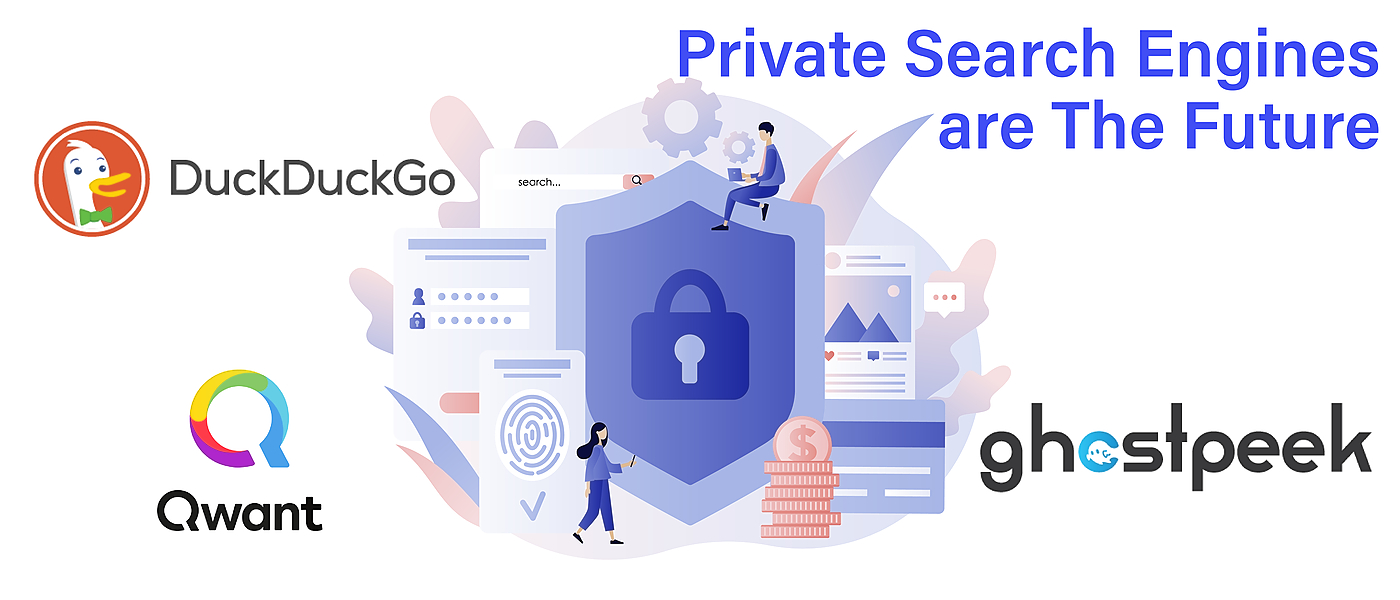 Private search engines aren't just for people wearing tinfoil hats anymore. Over the years these search engines have improved their search results and added new features to make the experience better for their users.
32. How to Rank for Multiple Keywords
 When you rank for multiple keywords, it becomes easier for you to show up in the top search results of Google.
33. Revolutionizing AI Development: Apache Cassandra Introduces Vector Search
 A powerful search tool, coupled with the world's most scalable database, is a game changer for AI applications.
34. [Explained] How Does A Search Engine Work?
 Have you ever wondered how a search engine works? We use search engines as much as we call, text or drive. But how do they work? The purpose of this article is to try to explain the basic concepts of a search engine using simple and clear examples.
35. Weaviate Is A Search Engine For Vector Embeddings
 A vector search for the masses needs an intuitive interface
36. Google, the Rise of Junk Articles and Why it has Become Harder to Find Info on the Web
 You’re googling something. The first result seems promising. You open it. It’s a really long, messy article, and you can’t find your needle in this haystack.
37. Link Building 3.0: How Smart Links Will Change How We Transact Online
 Cryptocurrencies are a democratization of typical currencies. They’re not regulated by any single governing body. They’re accessible to anyone with technological access and understanding. And hypothetically, they could be universally accessible. Even more importantly, their existence is maintained, tracked, and governed by the people using them.
38. How Google Influences Public Opinion
 Is Google trying to control what you think? The company certainly has an influence on public opinion — here are some of the ways Google affects your thoughts.
39. Free API Solutions for Automated Google Search
 OpenSERP that supports multiple search engines (Google, Yandex, Baidu), can be deployed on your hardware and helps you avoid being bound to a paid 3rd-party.
40. How To Create a Simple Autocomplete Field And Connect it With Elasticsearch
 Autocomplete is a feature to predict the rest of a word a user is typing. It is an important feature to implement that can improve the user’s experience of your product.
41. AI's Odyssey: Tracing the Past, Present, and Potential Future of Artificial Intelligence
 Explore the fascinating evolution of AI, from its humble beginnings to the cutting-edge advancements of today.
42. Guide to Keyword Research: Best Tools for 2020
 The world of keywords is always competitive, it never sleeps, something that’s unstoppable and the cycle never ends as long as there’s a lot of hard work being done on the digital frontier. To develop a robust keyword strategy is extremely important if you want to make the website visible, crawlable, user-friendly and profitable in the market that’s hungry for your services.
43. To be Relevant or not to be: a Search Story about Precision and Recall
 With the amount of data created growing exponentially each year and forecasted to reach 59 zettabytes in 2020 and more than 175 zettabytes by 2025, the importance of discovering and understanding this data will continue to be, even more than before, a decisive and competitive differentiator for many companies.
44. The History of the Weaviate Vector Search Engine
 Weaviate is an open-source search engine with a build-in NLP model called the Contextionary. What makes Weaviate unique, is that it stores data in a vector space rather than a traditional row-column or graph structure, allowing you to search through data based on its meaning rather than keywords alone.
45. An Intro to Recommendation Systems in Ecommerce
 Have you ever wondered how Spotify shows you the list of similar songs you have liked and
46. How Infographics Can Positively Impact your SEO Rankings[Case-Study]
 This content was originally published at Breakline.co: https://www.breakline.co/infographics-and-seo-boost-your-search-engine-rankings-case-study/
You might have heard this several times before — Content is King! Yes, it is. But today visuals materials like infographics are outperforming.
47. 5 Essential SEO Tips You Need to Follow in 2023
 SEO is just as viable as ever in 2023. Today, will discuss a few tips you can improve your search visibility and connect with your target audience.
48. How to Find Long-Tail Keywords

49. What are the Types of Neural Networks and How Do They Work?
 To succeed in providing an excellent user experience, website managers must know more than just which keywords people are entering.
50. 10 Alternative Search Engines to Use in 2020
 We know all the names of the big guys who can give us instant access to information, but with far-reaching data leaks and continued concerns about how our data is shared online, many people are looking for alternative search engines. Here is a primer on search engines and some alternatives you can use in 2020.
51. A Step-by-Step Guide to Growth-Minded Keyword Research
 Keyword research is a big step towards developing a solid wider keyword strategy. But even during this process, you can, and have to, keep in mind the end goal of your entire SEO efforts - top rankings, performance, and eventually growth.
52. A Simple Guide to Latent Semantic Indexing (analysis) and How it Bolsters Search
 LSI utilizes a mathematical technique called singular value decomposition (SVD), which looks for relationship between concepts and words in unstructured data.
53. 8 Ways to Improve the CLS Score in Google’s Core Web Vitals
 The Cumulative Layout Shift (CLS) of a website is important to user experience, which is why it’s one of three metrics included in Google’s new Core Web Vitals.
54. How LinkedIn Uses NLP to Design their Help Search System
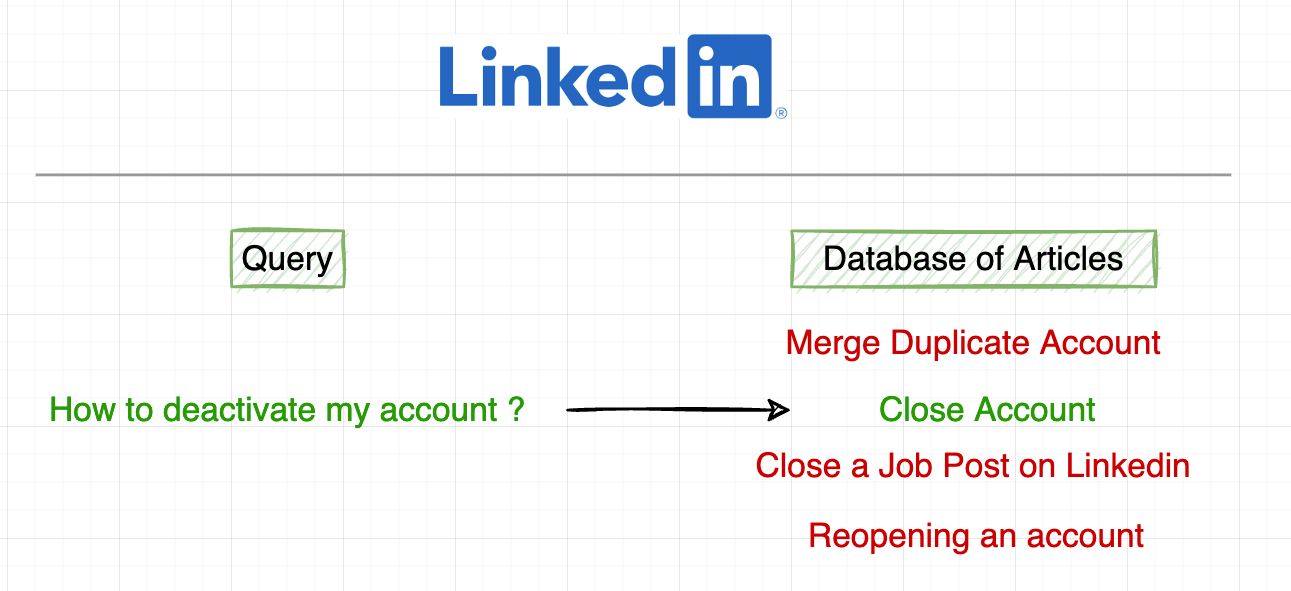 This is the summary and my key takeaways from the original post by LinkedIn on how NLP is being used (as of 2019) in designing its Help Search System.
55. Solving the Cold Start Problem with Pre-Trained AI Algorithms
 Discover how pre-trained algorithms like BERT and Universal Sentence Encoder revolutionize AI search.
56. Creating an Efficient Book Search Field Using Apache SeaTunnel, Milvus, and ChatGPT
 Using Apache SeaTunnel, Milvus, and OpenAI, we can achieve more accurate book title similarity searches through large language models.
57. Artificial Intelligence: Is Google Already a Loser in the Search Engine Battle?
 Explore whether Google is losing its dominance in the search engine market due to the rise of artificial intelligence. Discover key players, innovative technolo
58. What Does Google’s ‘Helpful Content’ Update Mean for Content?
 Google’s Helpful Content is an algorithmic update from that will analyze content and shadow-ban the ones riddled with SEO-influenced text and not relevant info.
59. Optimizing Elastic Search for High-Load Applications
 Explore how the rise of the digital revolution and data management has made Elastic Search a crucial element in application design.
60. How Weaviate's GraphQL API was designed
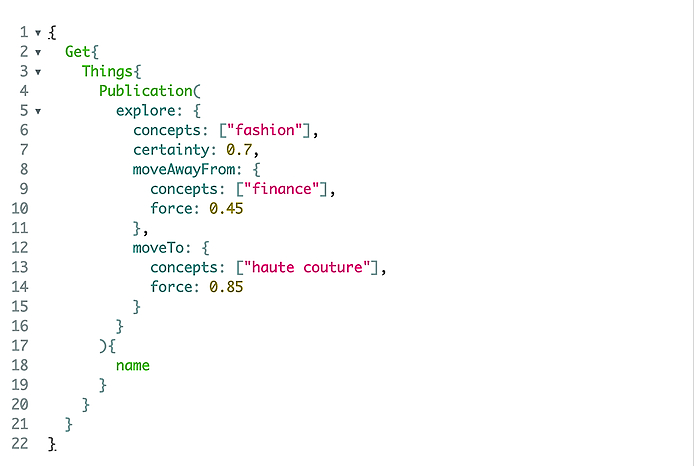 Any kind of data storage architecture needs an API. You want your users, and their applications, to access and interact with their data. And no matter how complicated the database architecture itself is, you want this interaction to happen as intuitively as possible.
61. Remarkable Marketing Strategies to Survive COVID-19
 With these uncertain circumstances, companies need to adapt their next marketing campaigns to alleviate risk strategically.
62. Infographics for SEO: Most Underrated Google Ranking Factor
 Infographics have been a popular online marketing tool for several years. Not only do they create a visually appealing, consumable piece of content, they can also boost engagement on social media and help improve your website’s search engine optimization.
63. To Google or Not to Google: What the Future Has In Store for Search
 In the future, "to Google" may become outdated in light of breakthrough changes anticipating search engines in the months to come.
64. 4 Strategies to Skyrocket Your Startups Online Visibility
 Have you ever observed how a spaceship propels itself into the orbit?
65. Startup Interview with James Taylor, Founder of Particular Audience (aka Similar Inc)
 Particular Audience and Similar Inc founder James Taylor is interviewed by Hackernoon following nomination for Startup of the Year!
66. Here’s Why I’m Gambling It All Away On My Open Source Startup
 By Han Xiao, Founder and CEO of Jina AI. Edited by Bing He and Alex C-G
67. Instant Search and Related Stories: Algolia + HackerNoon
 Instant search powered by Algolia cover to HackerNoon. Showing tags, companies and users as well.
68. Real-time Machine Learning For Recommendations and Search Engines
 Learn about the real-time machine learning for recommendation and search engines.
69. Web3: World Wide Blockchain
 The internet carries an extensive range of informational resources and services, most visibly the inter-linked hypertext documents and applications that make up the World Wide Web, the infrastructure to support email, and peer-to-peer networks for file sharing, phone services and – as of the recent – value exchange, albeit still mostly limited to ‘money’ and digitally native assets (coins, tokens).
70. How Certificate Chains Works
 Certificate chains are used to be able to verify an end user certificate against a list of intermediaries and a root authority. We are going to explain this in a bit more detail.
71. 8 Reasons Why Inventors Should Try This Free and Open-Source Patent Search Engine
 PQAI is a free and open-source patent search engine that uses artificial intelligence to search for patents using queries in natural language.
72. Google Is Dead: Could AI Bury Traditional Searching?
 So, is AI really the killer of traditional searching — or does it just complement it?
73. This Solo-Built Search Engine Is Challenging Big Tech
 One solo developer's experience and motivation in creating an independent web search engine.
74. An Intro to Keyword Gaps and How to Do a Keyword Gap Analysis
 This article discusses what a keyword gap is along with how and why a person should bridge this gap
75. Here's Why Scale Is Vital for Search Engines
 “Scale” refers to the amount of user-side data a search engine can accumulate. User-side data is a term that includes many types of data GSEs can obtain from
76. SearchGPT: The AI Search Engine That Could DESTROY Google
 SearchGPT, a prototype AI search engine by OpenAI, aims to revolutionize web searches by providing summarized, organized information.
77. Tips for Optimizing your Infographics for the Best SEO Results
 Infographics are pretty astonishing.
78. Is Google’s Hegemonic Long Years of Being a Search Engine Ending?
 TikTok releases an ad on how to search on the app; hence, functioning seemingly to the Google search engine.
79. How To Create a Search Engine for Any Table Using a Custom React Hook
 I am going to show you guys how to make a basic search engine that would enable anyone to search for specific data in your table that you’ve built using any package or library in React.
80. As AI Gets Better at Writing, There's Some Trouble on the Horizon
 In the realm of AI development, there's perhaps no more important goal than to create systems that can truly master natural language processing (NLP). That's the key to making AI broadly useful, as it will need to interact with humans (who lack the programming skills to speak machine languages). On the path to NLP, it's fair to say that getting an AI to speak human languages is a prerequisite to getting them to understand what people are saying.
81. 10 Reasons Why Long-tail Keywords Drive Traffic
 Here are ten reasons you should focus on long-tail keywords in your digital marketing strategy.
82. To be Relevant or not to be: a Search Story about Precision and Recall
With the amount of data created growing exponentially each year and forecasted to reach 59 zettabytes in 2020 and more than 175 zettabytes by 2025, the importance of discovering and understanding this data will continue to be, even more than before, a decisive and competitive differentiator for many companies.
83. Search Engine Optimization: Link Building Myths and Reality
 What is Link Building?
84. Googling Is a Skill: 4 Advanced Search Tips to Ask Google the Right Way
 Why don't you just ask Google?
85. Jina, a Deep Learning-Powered Search Framework, Can Help You Build Your Neural Search
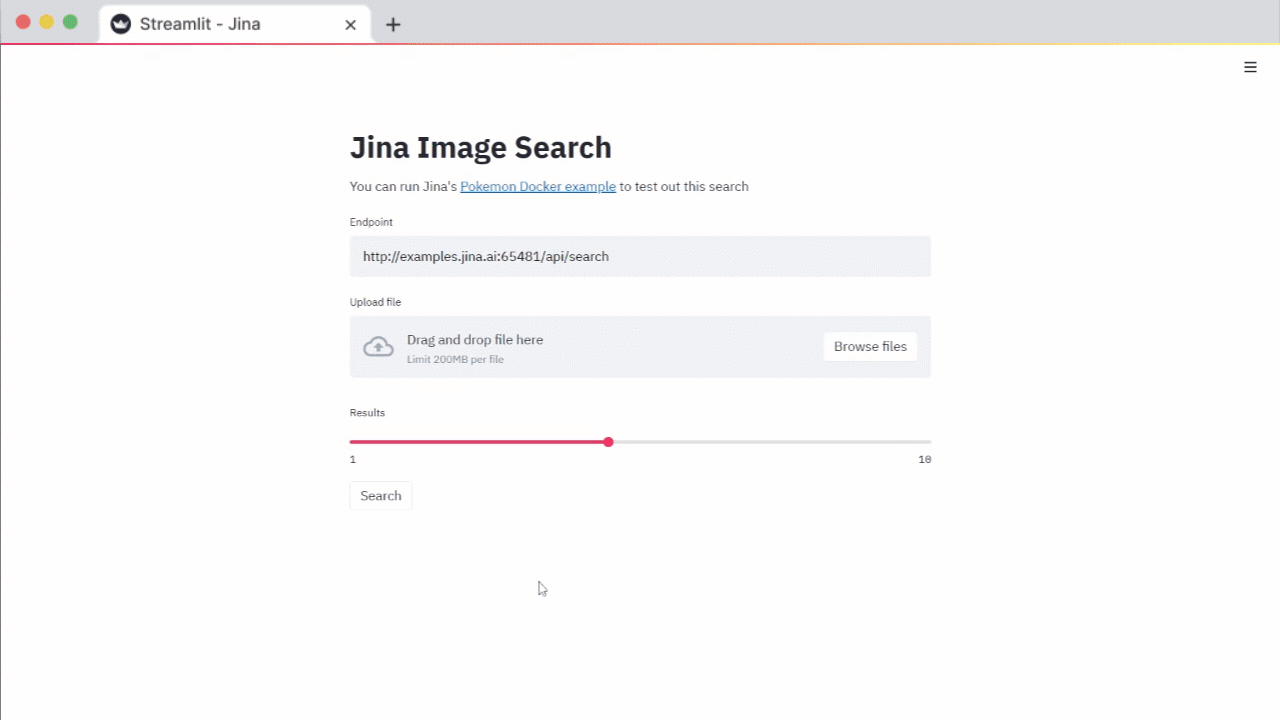 Use Jina to search text or images with the power of deep learning.
86. Semantic Textual Similarity: Here's How It's Changing the Game
 In this case, however, genuine game-changing is occurring, as STS fundamentally improves search engine and recommendation system accuracy and relevance.
87. Does Amazon Promote Their Brands Ahead of the Competition?
 About 40 percent of online purchases in the United States take place on Amazon.com.
88. Thriving Amidst Giants: A Guide for Small Players Entering the LLM Search Engine Market
 This article briefly explains what language models are and how small players in this exciting space can build sustainable products.
89. Privacy is a human right: An Interview with Startpage founder, Robert E.G. Beens
 Startpage Founder and CEO Robert E.G. Beens explains what inspired him to start the world's first private search engine.
90. Why Startups Should Focus on Revenue And Innovation, Not at SEO
 The success-killer for most startups is not running out of cash. It’s running out of time.
91. Simple Steps to Follow in Order to Ensure Greater Personal Internet Privacy
 An easy guide to getting started with online privacy.
92. You.com is the Latest Privacy-Preserving Search Engine Built for You
 You.com is a new search engine that lets you search less and find more online. Personalize your search sources, get snippet previews of the results privately.
93. Create a Search Engine and Other Startup Ideas Using Data-Ferret
 Data-ferret is a tiny, yet powerful util library to scan or transform deeply nested and complex object-like data with ease.
94. 8 SEO Mistakes (Almost) Everybody Makes... And How to Fix Them
 As you take steps to grow search engine traffic to your website, there are dumb SEO mistakes you need to avoid.
95. Bite-Sized Tips To Make Chinese Full-Text Search
 Today I'd like to highlight the challenge of search functionality in Chinese. In this article, we will go through the main difficulties of full-text search implementation for CJK languages and how to overcome them with the help of Manticore Search.
96. Optimizing AI Retrieval with Neural Hashing


