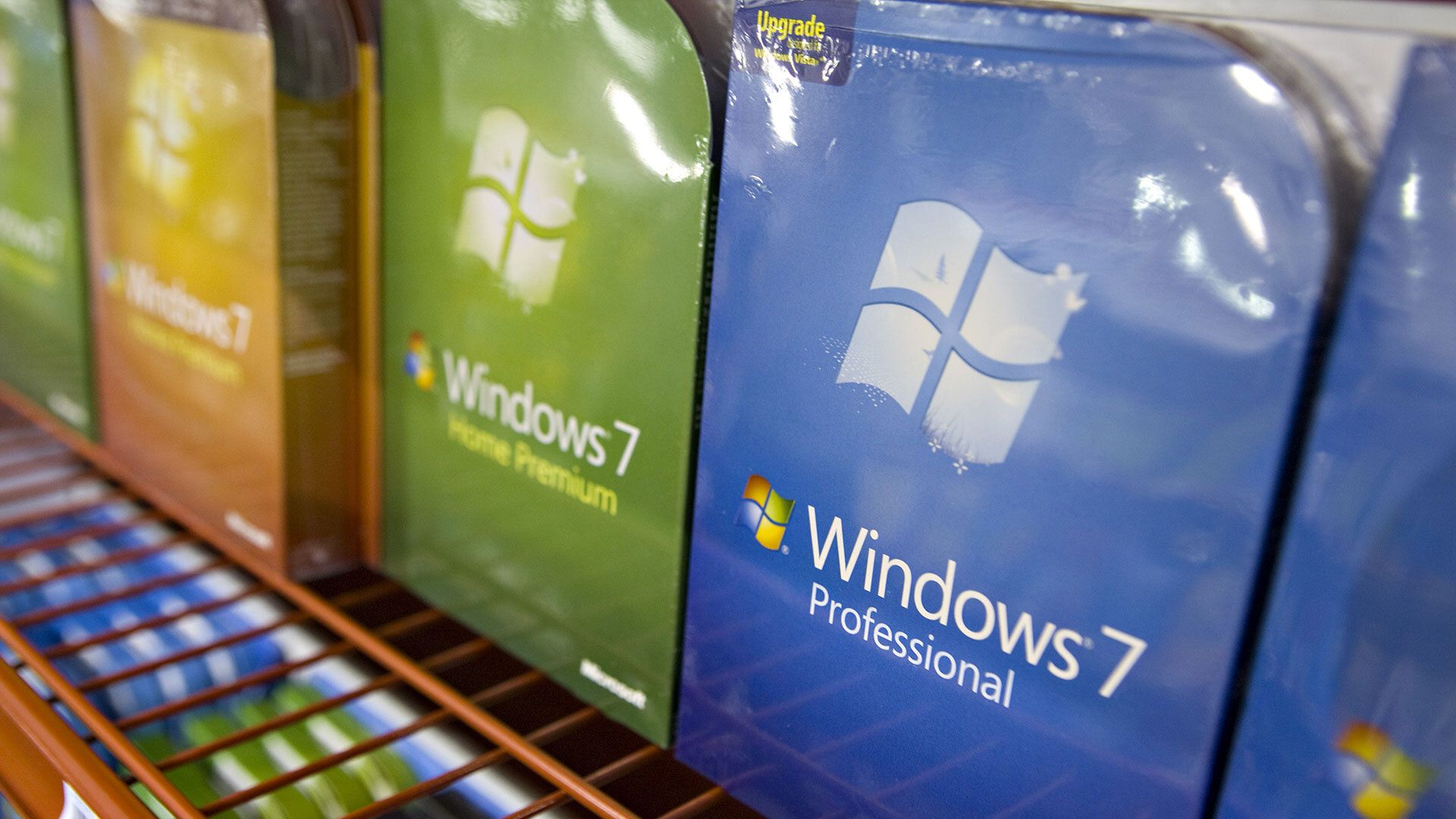
Windows 7 may have been retired years ago, but that hasn’t stopped enthusiasts from finding ways to bring modern hardware and features to Microsoft’s beloved operating system. A new community project is now giving Windows 7 the ability to support modern Nvidia, AMD, and Intel graphics cards, along with DirectX 12 and Vulkan 1.4 capabilities.
Developed by enthusiasts EAZY BLACK, kryptik, and VisualEhrmanntraut, the project backports WDDM 2.2 from Windows 10. Interestingly, Windows 7 originally launched with WDDM 1.1, while Microsoft introduced WDDM 2.0 with Windows 10 in 2015 and WDDM 2.2 with the Creators Update in 2017. Microsoft also introduced a limited version of DirectX 12 for Windows 7 in 2019; however, that implementation was only meant for developers to port select games to the older operating system.
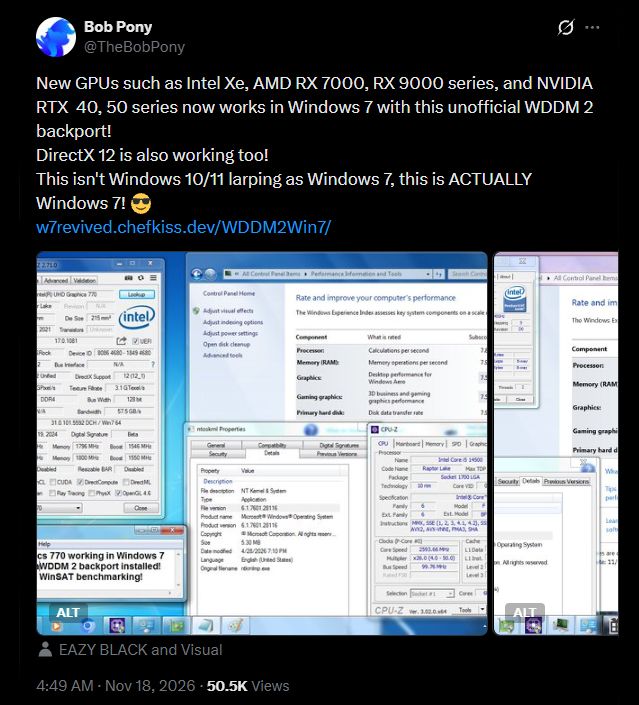
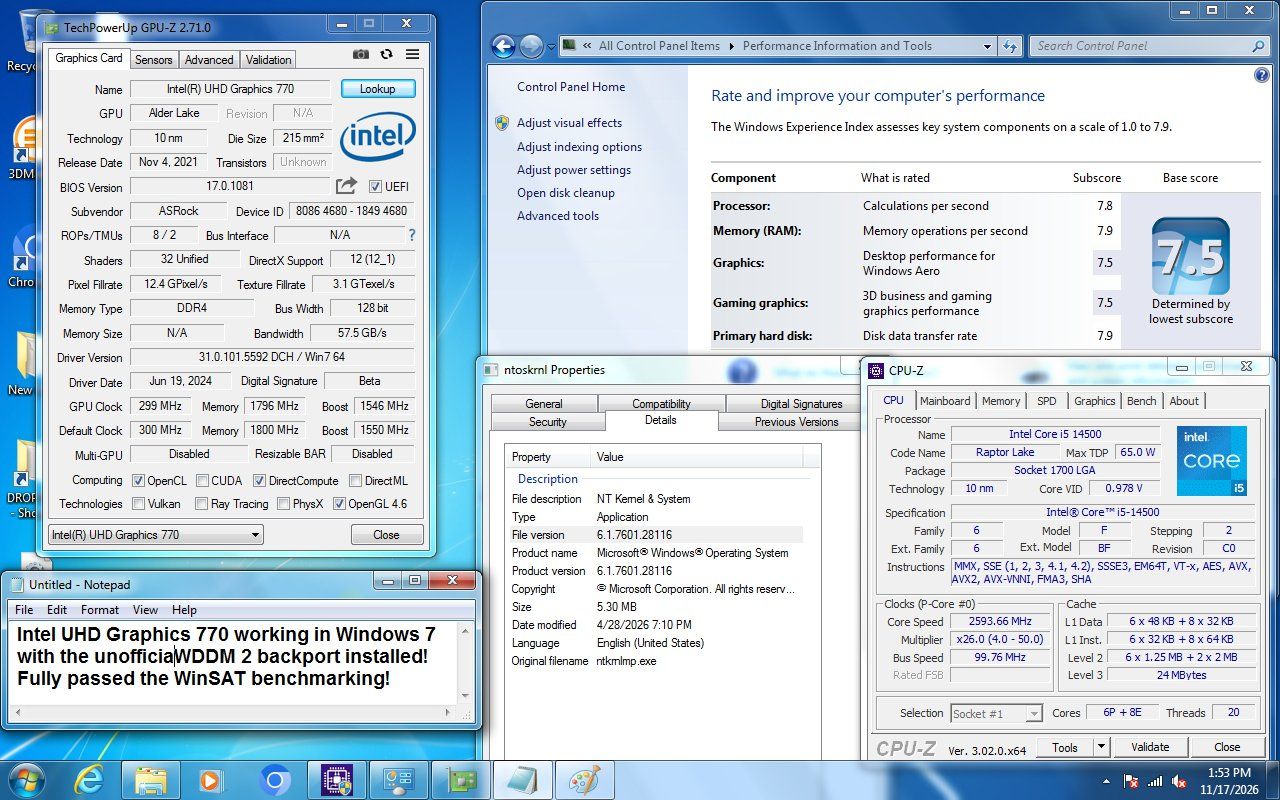
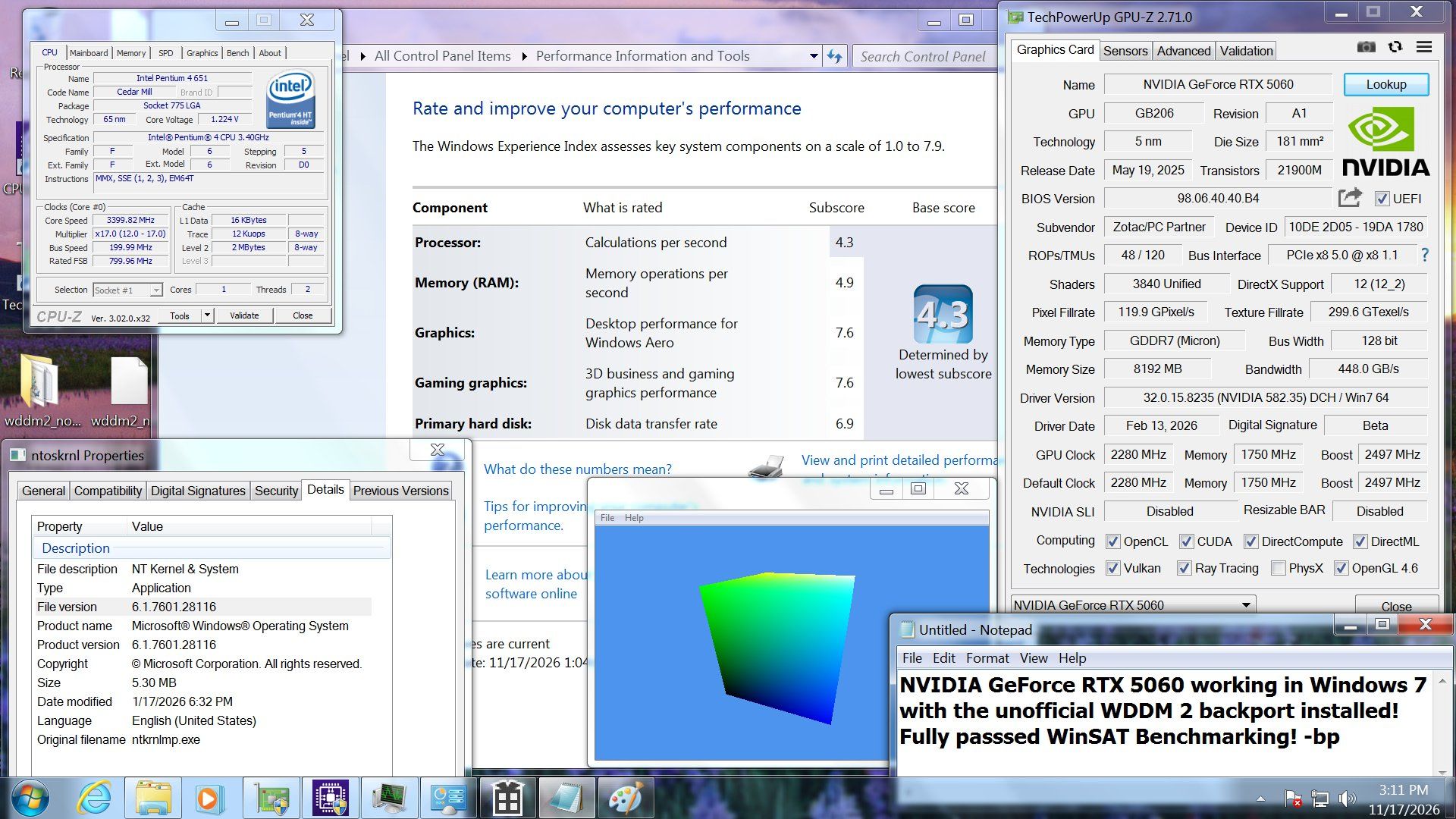
According to a post by @TheBobPony on X, Nvidia's RTX 40 and RTX 50 series, AMD's Radeon RX 7000 and RX 9000 series, and select Intel Arc graphics cards are supported. Screenshots confirm that the backport enables GPUs to be recognized by Windows 7 as well as third-party apps like GPU-Z. It is also claimed that features such as ray tracing and DLSS also work on compatible hardware. Older GPUs, including Nvidia's RTX 30 series and AMD's Radeon RX 6000 series, may also benefit from the project. That said, actual feature support depends on the graphics card, driver implementation, and application.
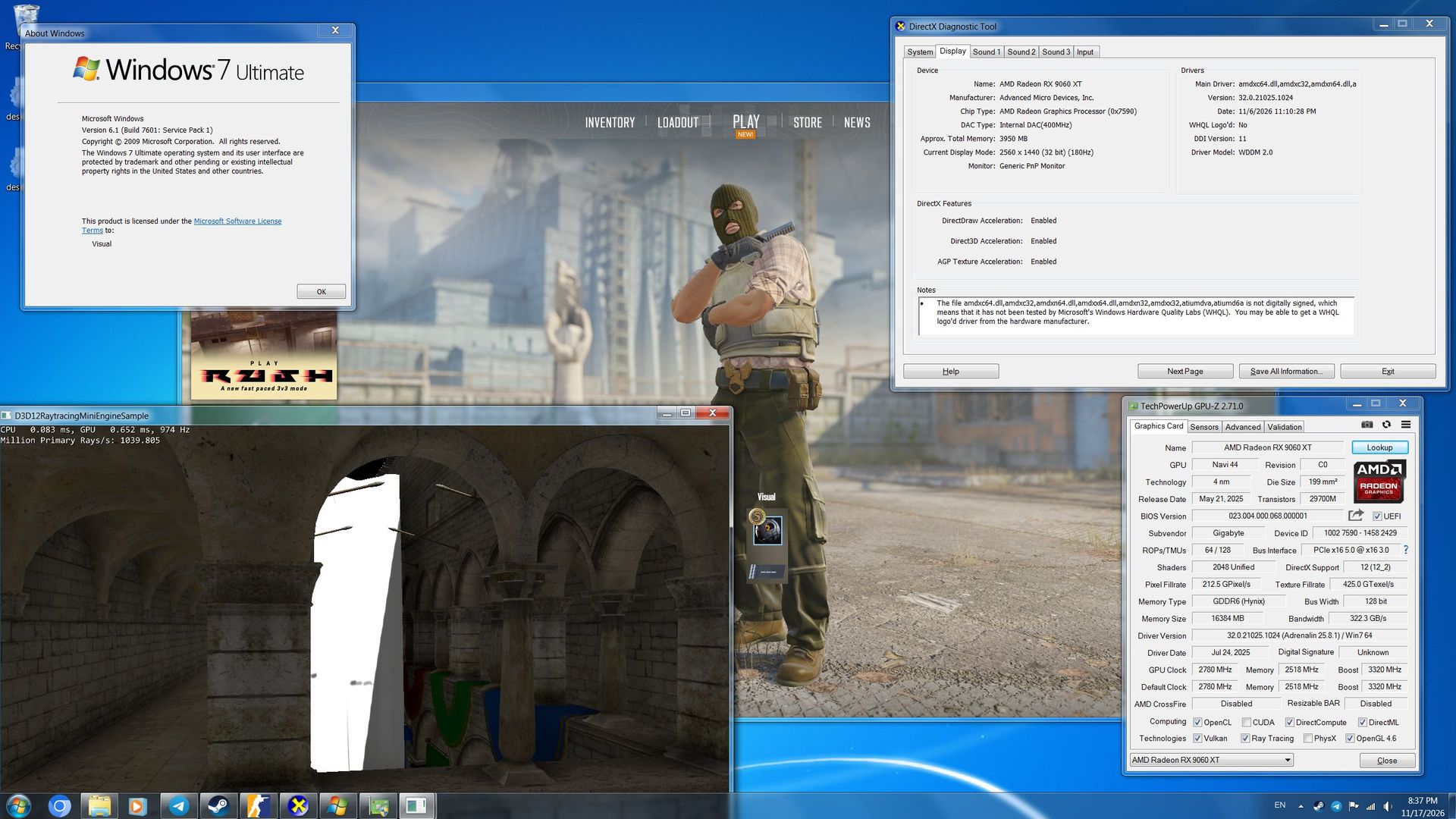
For anyone who still prefers Windows 7 or relies on older software and hardware, this project is worth exploring, especially if you intend to extend the usefulness of the operating system. Users can also combine it with the VxKex compatibility layer, allowing newer Windows apps to run on older operating systems. You can grab the project files and modified drivers by heading to the W7Revived website.
There’s a reason why enthusiasts continue to keep Windows 7 alive. Released in 2009 as a successor to Windows Vista, it offered a familiar interface, solid performance, and a straightforward desktop experience. It became one of Microsoft’s most popular operating systems and remained a favorite among PC enthusiasts and everyday users long after the arrival of Windows 10.
In fact, Windows 7 still has some life left in it. We recently tested the aging operating system against Windows 11 on a modern PC running on an AMD Ryzen 7 9800X3D, Radeon RX 6950 XT, and 64GB of DDR5 memory. The tests included eight DirectX 11 and two DirectX 9 titles, with Windows 7 delivering better performance in certain scenarios, particularly CPU-bound games, along with stronger 1% lows in some titles.


