Enterprise AI traffic is hard to secure because security-relevant information is often inside an otherwise legitimate connection.
A developer can send source code to a coding assistant over HTTPS. An internal application can submit retrieved customer data to a model API. An autonomous agent can call a tool through an approved endpoint and still perform an action the business never intended.
For architects, the key question is whether the control can bind an AI interaction to enough context to make a useful decision: user or workload identity, application, model, data sensitivity, destination, prompt intent, tool access, and downstream action. That's what we'll consider for this comparison.
In this article, you'll learn how to evaluate AI network firewalls by the context they can see rather than their feature lists, and how five leading options (Check Point, Palo Alto Networks, Zscaler, Cisco, and Akamai) differ in architecture and best-fit use cases.
What We'll Cover:
- A Useful Mental Model: Policy Follows the AI Transaction
- Check Point
- Palo Alto Networks
- Zscaler
- Cisco
- Akamai
- Architecture Matters More Than Feature Count
- Conclusion
A Useful Mental Model: Policy Follows the AI Transaction
An AI transaction may cross several trust boundaries. A user interacts with a browser, the browser reaches an AI service, the AI service invokes a model, the model may retrieve data, and an agent may then call a tool. A firewall positioned at only one point can see only part of that chain.
This makes deployment architecture a first-class selection criterion. Network enforcement offers broad coverage and can protect unmanaged traffic. Security-service-edge controls follow distributed users. Runtime controls understand application prompts and responses. Edge and API controls can protect public AI applications. And enterprises increasingly need to decide how these layers share policy and telemetry.
Let's look at the tools you can use to help secure your enterprise AI traffic.
Check Point
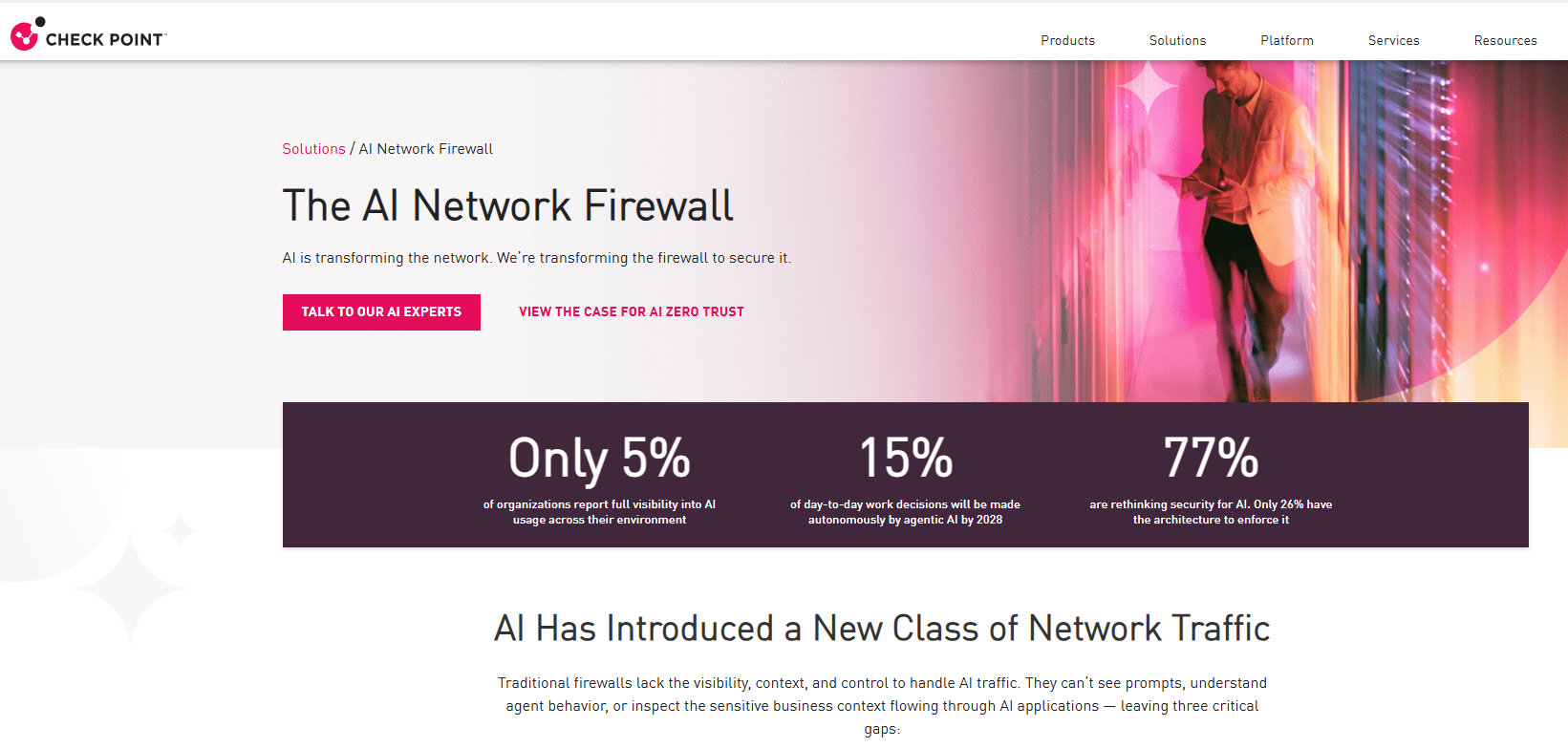
Check Point AI network firewall extends firewall enforcement into AI-aware traffic analysis. It's designed to discover AI use across employees, applications, and agents, inspect prompts and files, and govern interactions with AI services from the network layer.
From an architecture perspective, the interesting feature is reach. Network enforcement can cover traffic from systems without a dedicated browser extension or endpoint integration, which is useful for unmanaged and non-user traffic. The platform also targets MCP and agent activity, moving beyond simple AI application categorization.
Teams should validate where deep AI context is available when sessions are encrypted or mediated by third-party services.
Palo Alto Networks
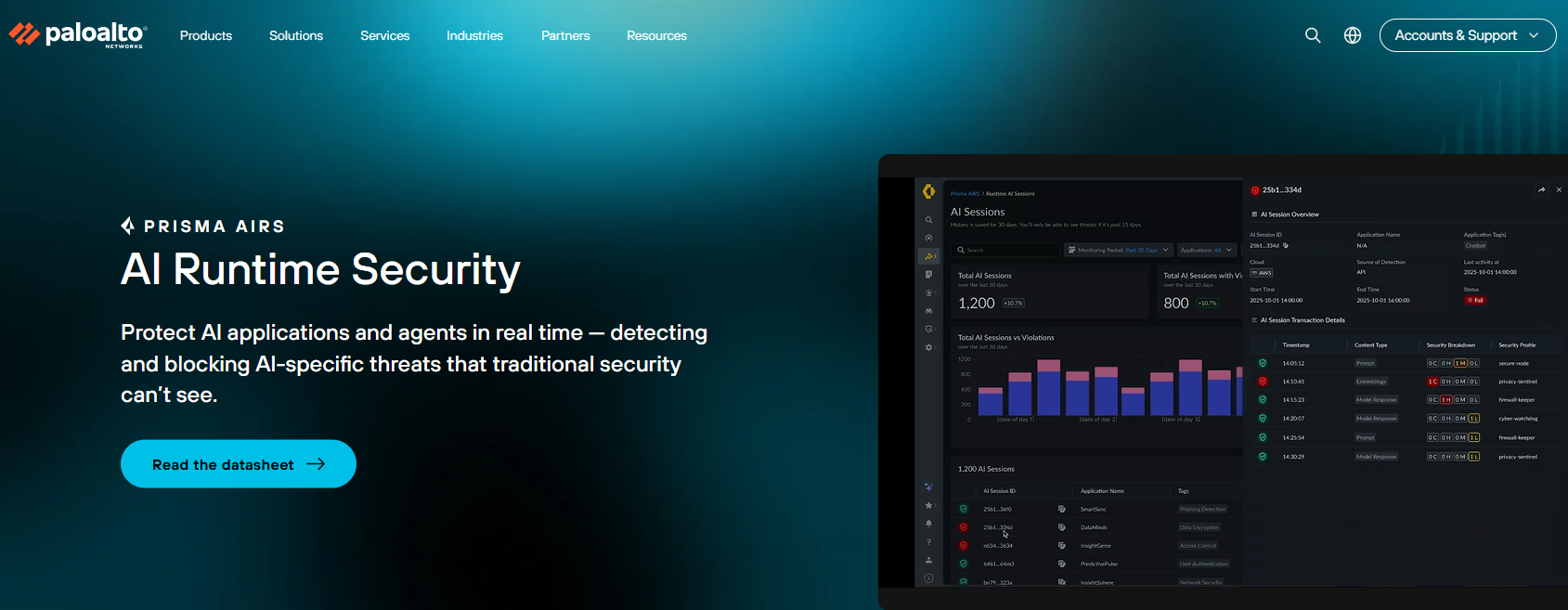
Palo Alto Networks' AI network firewall is best represented by AI Runtime Security, which protects AI applications and agents during execution. Its policy surface includes prompts, responses, data flows, and live AI interactions, with controls designed around the compound application rather than only the transport session.
For developer-heavy environments, this is important because the application runtime can see context a generic network device may not. The offering also sits inside a broader AI security platform, allowing testing and posture information to inform runtime protection. Its fit depends on whether the enterprise wants AI security centered on applications and agents or on broad network-level AI usage.
Zscaler
Zscaler AI network firewall takes a zero-trust and cloud-delivered approach. Rather than centering protection on an appliance, the platform aims to place AI policy in the path of user, application, and agent interactions, with controls for access, data, and AI activity.
This model aligns well with organizations whose users connect directly to SaaS and cloud services from many locations. Policy can follow the identity rather than relying on traffic returning to a corporate network.
Architects should examine how the service handles workload-to-model and agent-to-tool flows in addition to employee browser traffic, because those paths may have different context and latency requirements.
Cisco
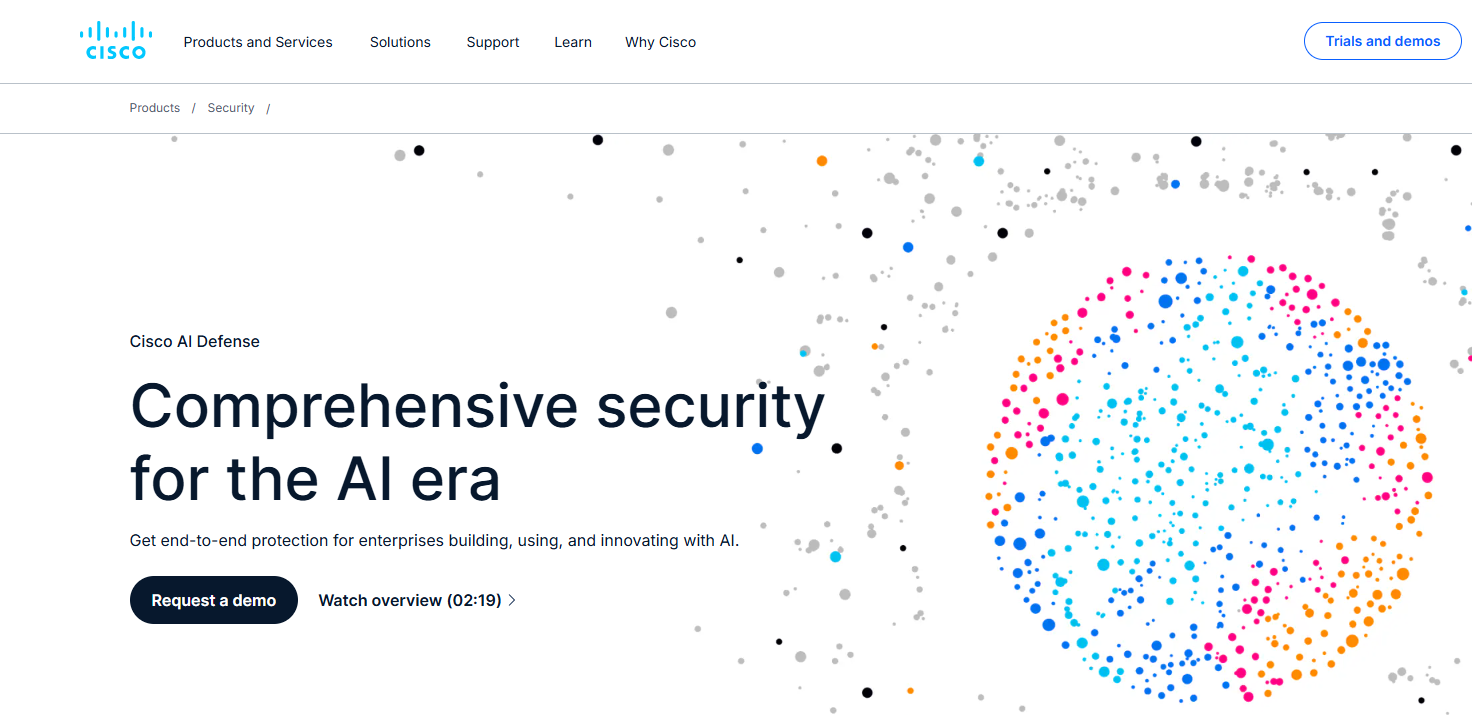
Cisco AI network firewall is part of AI Defense, a broader architecture spanning discovery, validation, supply-chain risk, and runtime protection. Its runtime layer applies guardrails to model and agent interactions and can extend into network enforcement across cloud and on-premises environments.
The advantage is breadth across the AI lifecycle. Enterprises can assess a model or MCP component before deployment, then protect it when live. For enterprises already standardizing on Cisco networking and security, that can create operational leverage. For teams seeking a narrowly scoped firewall function, the broader platform model may be more than they need.
Akamai
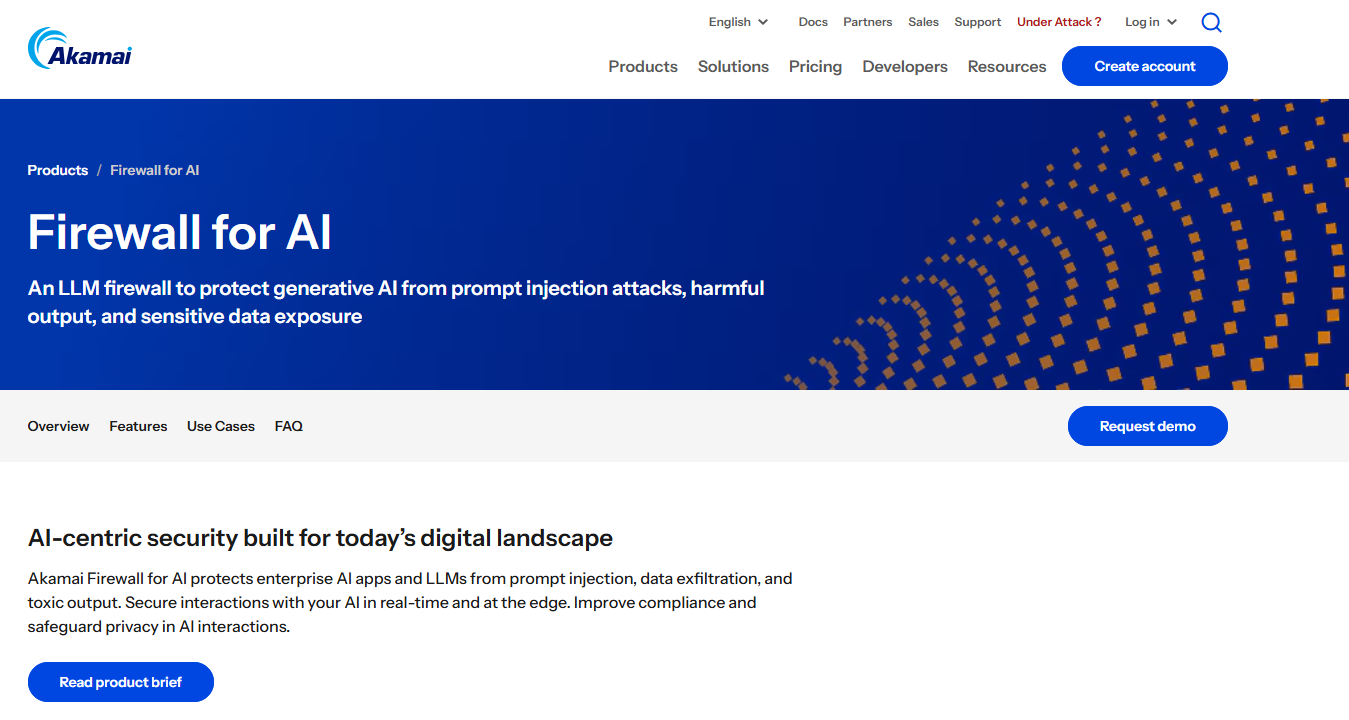
Akamai AI network firewall focuses on protecting the application-model boundary. Firewall for AI inspects inputs and outputs for prompt injection, jailbreaks, data exposure, and unsafe content, with deployment at the edge or through an API.
This makes it particularly relevant for internet-facing AI applications where the threat originates in user-supplied prompts, and the response itself can create risk. It's less oriented toward enterprise-wide employee AI governance than some alternatives. In return, its application-centric architecture can be straightforward when the primary goal is to put a security layer directly in front of an LLM application.
Architecture Matters More Than Feature Count
A useful enterprise design often combines different control points.
Network policy can decide which AI services or agents are reachable. Runtime policy can inspect application-specific prompts and actions. Identity policy can restrict which tools and data an agent can access. Data controls can stop sensitive information from leaving even when the AI service itself is approved.
That's why feature checklists can be misleading. Two products may both claim prompt inspection while seeing very different parts of the transaction.
Before selecting an AI network firewall, draw the actual AI data path, identify where authority changes hands, and choose controls that can observe those transitions. The product that sees the right context at the right enforcement point is usually more valuable than the one with the longest list of AI-related features.
Conclusion
There's no single best AI network firewall, only the one that works best for where your risk is. If your biggest worry is employees pasting code into chatbots or agents calling tools nobody approved, start with network or security-service-edge controls like Check Point or Zscaler. If you're building AI applications and need to see prompts, responses, and agent actions at runtime, Palo Alto Networks and Cisco fit better. If you're running a public-facing AI app, Akamai puts protection right in front of it.
Most enterprises will end up combining two or more of these, so before you buy anything, map your AI data path and check which tool actually sees the traffic you care about.
Hope you enjoyed this article. You can connect with me on LinkedIn.