Backend
Construction of Ternary Minimal Linear Codes with Dimension $n+r$ Via Index Codes and The Access Structures of Their Dual Codes
arXiv math.IT0 views
arXiv:2611.24072v1 Announce Type: new Abstract: Recently, minimal linear codes have been extensively studied due to their applications in secret sharing schemes, secure two-party computations, and so on. Constructing minimal linear codes violating the Ashikhmin-Barg condition and then determining their weight distributions have been interesting in coding theory and cryptography. In this paper, we present a general construction of ternary linear codes of dimension $n+r$, where $n$ and $r$ are positive integers, and derive a necessary and sufficient condition for the resulting codes to be minimal. We first specialize the construction using index codes arising from spreads, with three classes of index codes satisfying the minimality condition, we obtain the parameters and weight enumerators of the corresponding minimal codes, and determine the access structures type of the secret-sharing schemes based on their dual codes. By the index codes from Krawtchouk polynomials, we then give a second specialization of the construction, with a class of index codes satisfying the minimality condition, we obtain the parameters of the resulting minimal codes, and determine the access-structure type of the secret-sharing scheme based on each dual code. Several constructed families of minimal codes violate the Ashikhmin-Barg condition.
Source:https://arxiv.org/abs/2611.24072PreviousMIMO Channel Extrapolation to Unobserved Radiation Modes via Learned Path RefinementNextA Characterization of Rings Where a Linear Transformation and Its Inverse and Transpose Have the Same Information Exchange
Related posts
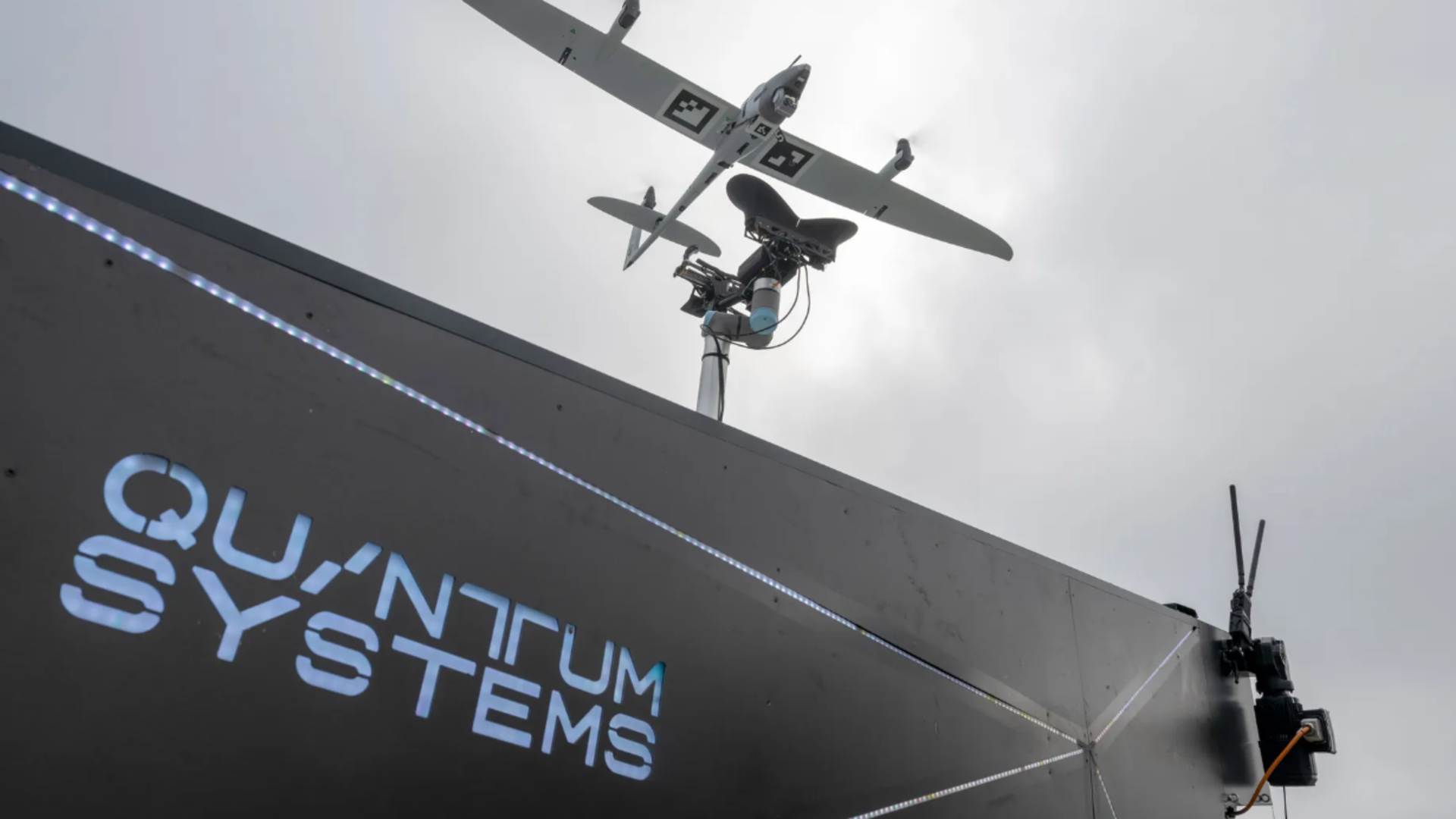
Hackers try to plant malware into Ukraine-bound drones — Germany's Quantum Systems says there's 'no risk' after cyberattack failed
0TechRadar

AI data center power demand will double by 2030 thanks to $4 trillion in spending, adding an entire Great Britain to energy strain
0Tom's Hardware

Physical AI Foundations and Definitions — Ch.10: Future Directions [EN]
0dev.to

Physical AI Foundations and Definitions — Ch.08: Physical AI Product Strategy [EN]
0dev.to

Physical AI Foundations and Definitions — Ch.07: Relation to AMR Manipulator Humanoid Quadruped UAV [EN]
0dev.to

Physical AI Foundations and Definitions — Ch.05: Physical AI Taxonomy [EN]
0dev.to