Backend
Fair Selection of Generalized Nash Equilibria: A Comparability Perspective
arXiv cs.SY0 views
arXiv:2611.09060v1 Announce Type: cross Abstract: Generalized Nash equilibrium (GNE) problems model self-interested agents coupled through their costs and shared constraints, and arise throughout control applications that allocate a scarce common resource. Such problems typically admit a continuum of equilibria, so any implementation must \emph{select} one. This selection is not neutral: it decides how the cost of the shared constraint is distributed among the agents, a decision often expected to be fair. The variational GNE (v-GNE), which charges all agents a uniform shadow price, is the conventional choice and is frequently advocated as fair. Through the lens of \emph{comparability} from social choice theory, we show that the GNE set itself requires no inter-agent comparability of costs, whereas the v-GNE implicitly assumes cardinal unit comparability, one of the stronger notions. We then introduce the fair GNE (f-GNE), which selects an equilibrium by explicitly optimizing a fairness metric matched to the comparability at hand, and give constructive routes to compute it for single-constraint and linear-quadratic games. An electric-vehicle charging game serves as a running example throughout this self-contained tutorial.
Source:https://arxiv.org/abs/2611.09060PreviousAn Ultra-Low-Noise Tunable TIA in 45nm Silicon Photonics for Electro-Optical Ultrasound Data AcquisitionNextCircuit Theory-Informed AI for Condition Monitoring in Power Electronics
Related posts
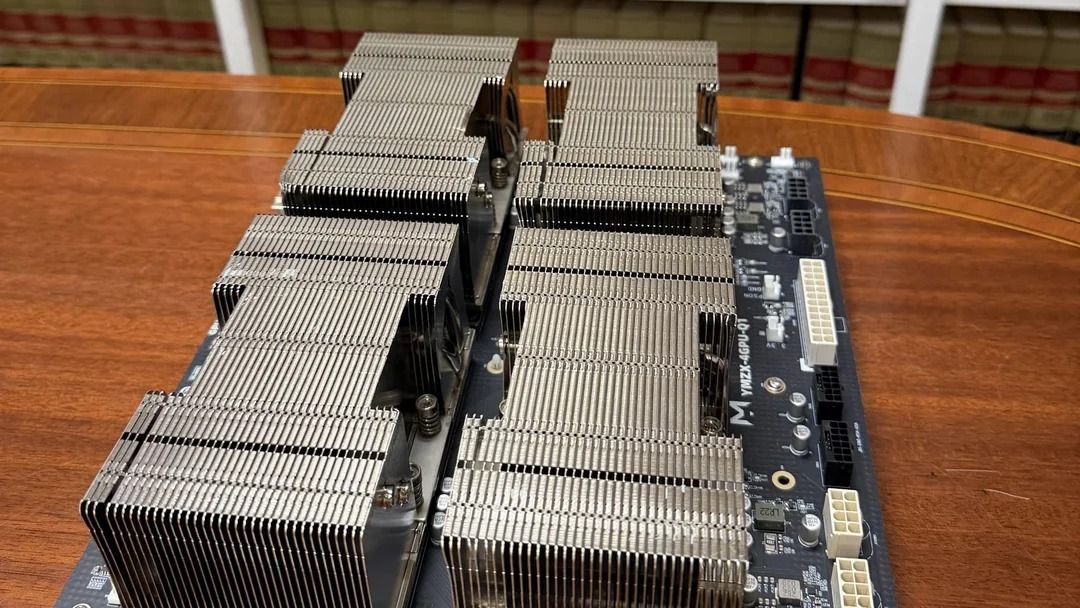
Lawyer builds private AI server with eight used Nvidia V100 GPUs
0Tom's Hardware
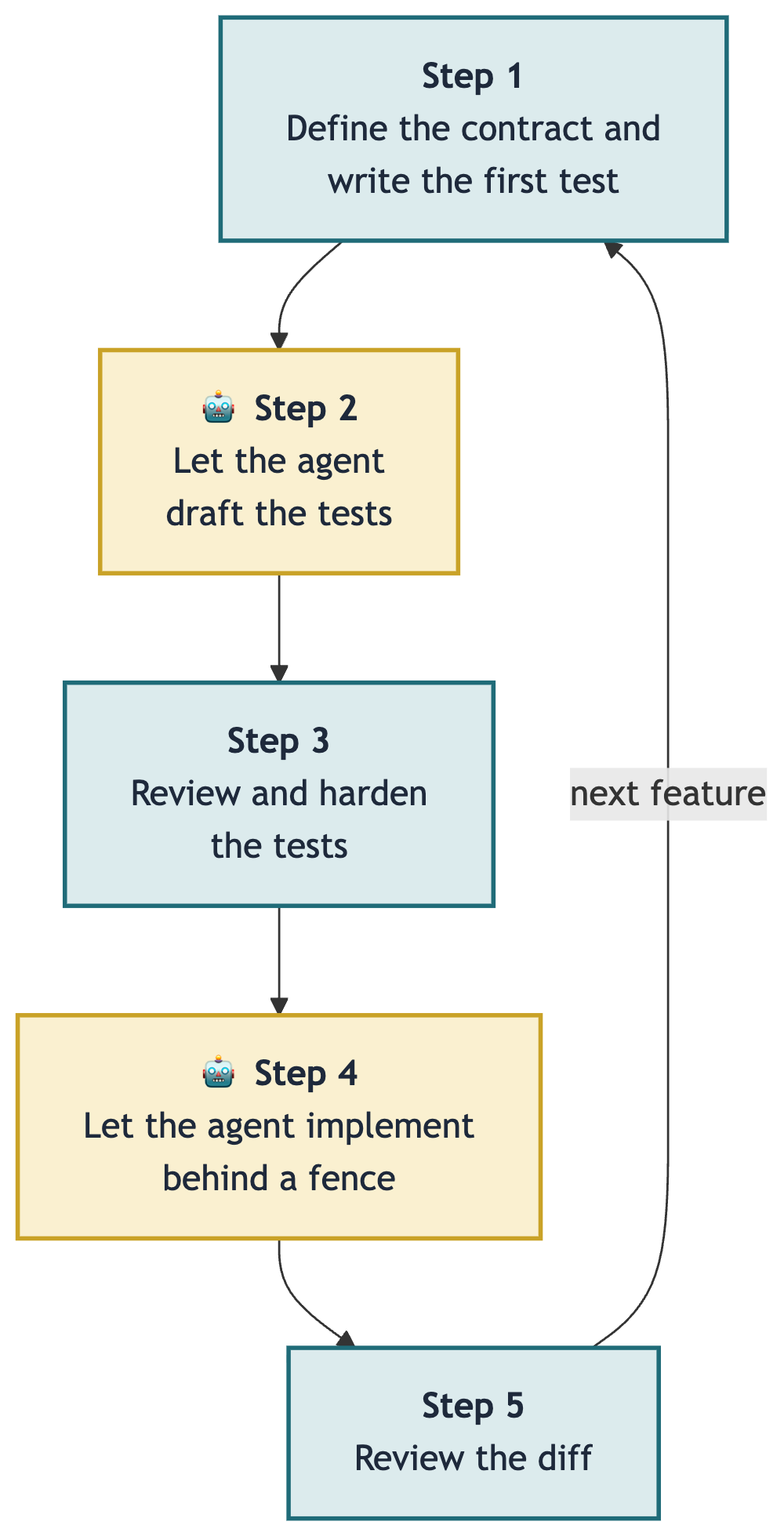
TDD With AI Agents: Design the Tests First, Let the Agent Implement
0Real Python

From One Sentence to a Working App: What Vibe Coding Gets Right — and Where It Still Needs You
0dev.to

A button people press 57 times per visit: building a no-backend tap counter that doesn't lose counts
0dev.to

The 15-Day Clock: Could You Reconstruct an AI Incident Before the Deadline?
0dev.to

DOBI: machine identity, DAMs, and x402 payments as a device workflow
0dev.to