AI & ML
How Far Can Lightweight LLMs Go in Intent-to-SLO Translation?
arXiv cs.NI0 views
arXiv:2611.07982v1 Announce Type: new Abstract: Intent-based networking (IBN) promises QoS provisioning in which the network derives the configuration from operator-stated goals. Its first step, translating a natural-language intent into enforceable service-level objectives (SLOs) grounded in a live snapshot of the network state, increasingly relies on large language models (LLMs). These large models add cost and energy to the management loop and typically require multi-GPU, cloud-hosted infrastructure. Can lightweight open LLMs take over this step dependably? We answer this question with a five-dimensional evaluation of ten LLMs with <10B parameters from five families, under four prompting setups, on 716 placement intents. We evaluate translation performance, intent validation, hallucination, energy impact, and robustness to diverse phrasing. The best configurations translate intents with a strict F1 of 0.943 and reject up to 191 of 195 invalid intents. With few-shot reasoning, the strongest models hallucinate unsupported QoS requirements in only about one response in a hundred, whereas the zero-shot setup struggles. A translated intent costs 0.044-0.148 Wh of GPU energy without reasoning, and added energy cost for reasoning pays off for the weaker models. Furthermore, we show that realistic rephrasing lowers the rejection of invalid intents in 15 of 16 configurations for the best-performing models, leaving robust intent validation as a key open challenge for reliable IBN. Our code and data are available: https://github.com/ggck43/intent2slo.
Source:https://arxiv.org/abs/2611.07982PreviousInstantiating the Knowledge PlaneNextBeyond Quantum Messages: Toward Quantum-Native Network Functioning
Related posts

I’ve reviewed almost every Android foldable this year — here’s how the iPhone Duo compares
0The Verge

Physicl raises $10M to make the digital world real enough for robots
0TechCrunch

Kubernetes, mark II? Why Google’s giving away gVisor, a code sandbox used by Anthropic and OpenAI
0The New Stack

AI helps find better recipes for 3D-printing titanium parts
0Phys.org Tech

Newly-developed paint could keep your home cooler and lower energy bills
0Phys.org Tech
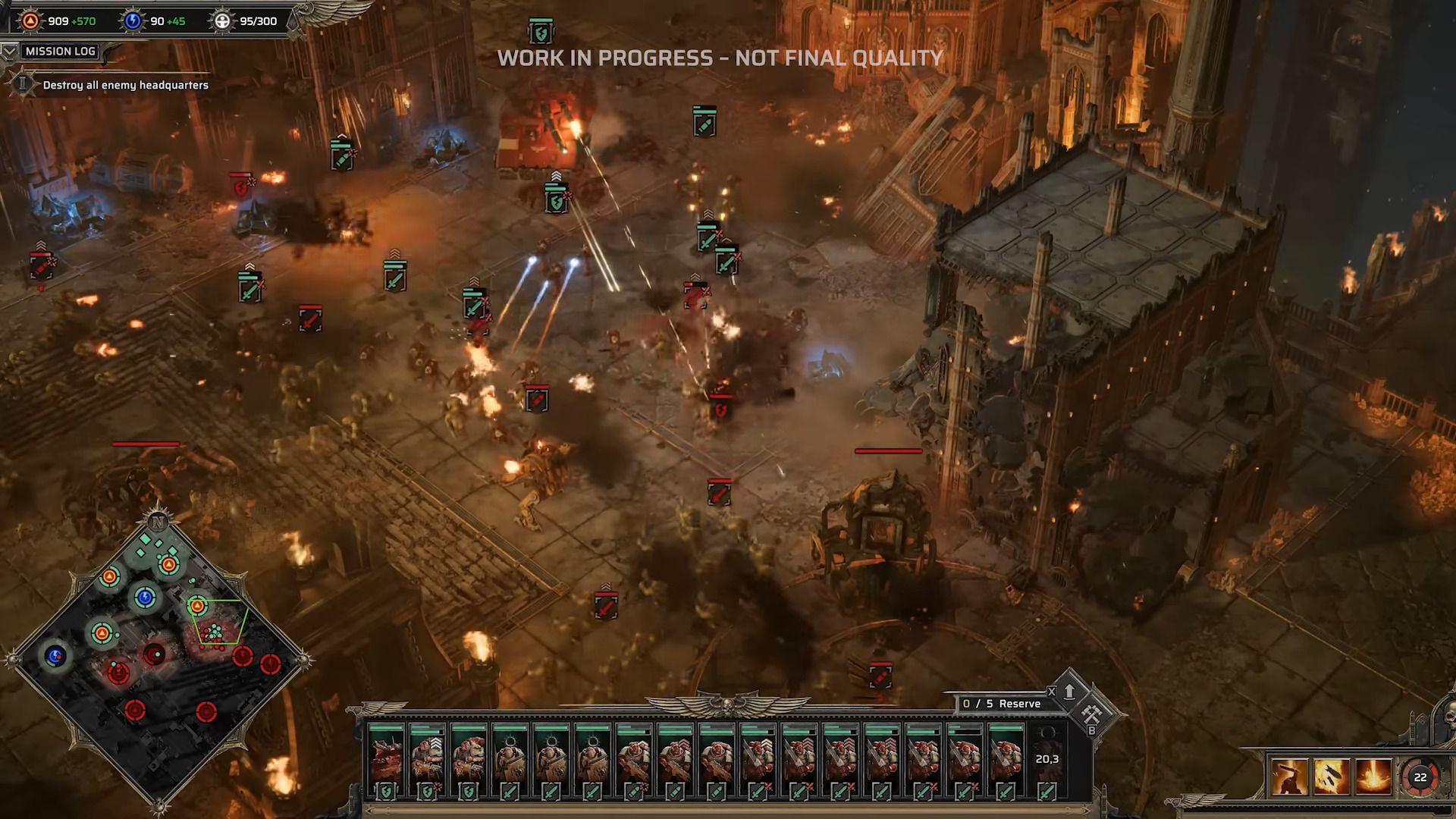
Warhammer 40,000: Dawn of War 4 creative director explains how core 40K tabletop features like ‘Armor of Contempt’ were adapted to the RTS — ‘It’s not the same mechanic, but it does kind of the same t
0TechRadar