AI & ML
Instance-optimal high-precision shadow tomography with few-copy measurements: A metrological approach
arXiv math.IT0 views
arXiv:2602.04952v3 Announce Type: replace-cross Abstract: We study the sample complexity of shadow tomography in the high-precision regime under realistic measurement constraints. Given an unknown $d$-dimensional quantum state $\rho$ and a known set of observables $\{O_i\}_{i=1}^m$, the goal is to estimate expectation values $\{\mathrm{tr}(O_i\rho)\}_{i=1}^m$ to accuracy $\epsilon$ in $L_p$-norm, using possibly adaptive measurements that act on $O(\mathrm{polylog}(d))$ number of copies of $\rho$ at a time. We focus on the regime where $\epsilon$ is below an instance-dependent threshold. Our main contribution is an instance-optimal characterization of the sample complexity as $\tilde{\Theta}(\Gamma_p/\epsilon^2)$, where $\Gamma_p$ is a function of $\{O_i\}_{i=1}^m$ defined via an optimization formula involving the inverse Fisher information matrix. Previously, tight bounds were known only in special cases, e.g. Pauli shadow tomography with $L_\infty$-norm error. Concretely, we first analyze a simpler oblivious variant where the goal is to estimate an observable of the form $\sum_{i=1}^m \alpha_i O_i$ with $\|\alpha\|_q = 1$ (where $q$ is dual to $p$) revealed after the measurement. For single-copy measurements, we obtain a sample complexity of $\Theta(\Gamma^{\mathrm{ob}}_p/\epsilon^2)$. We then show $\tilde{\Theta}(\Gamma_p/\epsilon^2)$ is necessary and sufficient for the original problem, with the lower bound applying to unbiased, kurtosis-bounded estimators when $p \geq 1$. Our upper bounds rely on a two-step algorithm combining coarse tomography with local estimation. Notably, $\Gamma^{\mathrm{ob}}_\infty = \Gamma_\infty$. In both cases, allowing $c$-copy measurements improves the sample complexity by at most $\Omega(1/c)$. Our results establish a quantitative correspondence between quantum learning and metrology, unifying asymptotic metrological limits with finite-sample learning guarantees.
Source:https://arxiv.org/abs/2602.04952PreviousBare-ancilla fault-tolerant syndrome extraction: General extensions of distance-three codes and structural criteria for graph codesNextMinimum-Length Permutation-Invariant Qudit Codes from Edge-Colorings of Complete Graphs
Related posts
Trump says a pardon for Nvidia CEO Jensen Huang is 'always an option'
0Tom's Hardware
AI models on one vLLM server secretly talk through GPU rounding errors
0Tom's Hardware
US defense officials considered using Cold War law to force Nvidia to reinstate Jensen Huang as CEO following his resignation, report claims
0Tom's Hardware

New York Governor Kathy Hochul signs ban on AI chatbot toys backed by $15,000 daily fines
0Tom's Hardware

Best Black Friday Wi-Fi router deals 2026
0Tom's Hardware
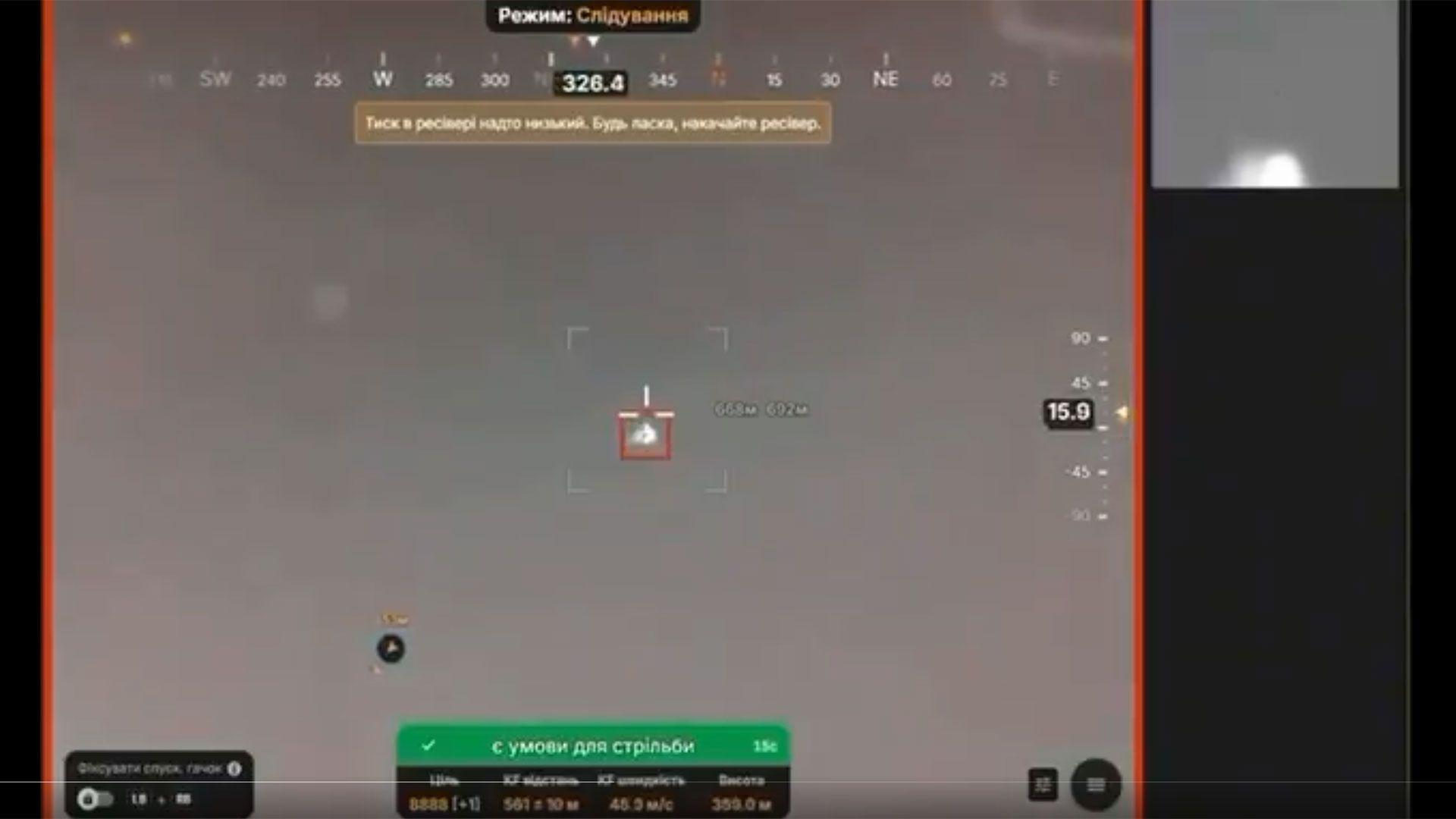
Ukraine downs Russian jet-drone with cheap high-powered laser for the first time
0Tom's Hardware