AI & ML
Satisficing as competitive Bayesian weighting: a minimal model of goal-directed choice under an unattained target
arXiv stat.ML0 views
arXiv:2611.07270v1 Announce Type: cross Abstract: Animals and humans often do not maximize; they act relative to goals (aspiration levels) that are frequently not yet met. How can a goal that is not (yet) realized organize choice? Deacon (2012) calls such absence-referenced organization \emph{ententional}, and Garc\'{i}a-Valdecasas and Deacon (2024) argue that ends are best understood as constraints rather than as particular states. We examine this idea in a minimal formal setting: Risk-sensitive Satisficing (RS), a bandit learning rule that values each action by its share of past trials multiplied by its surplus or shortfall relative to an aspiration level. We show that RS can be rewritten as a Bayesian-like estimator, Attention Competitive Bayes (ACB), in which the aspiration level is the prior mean of every action and the finite budget of trials sets how strongly evidence can override it. Two consequences follow. First, actions that are no longer sampled are partially overridden by the goal rather than by past observations: their estimates relax toward the aspiration level without any data being discarded. This ``pseudo-forgetting'' distinguishes ACB from models with an explicit forgetting rate. Second, when the aspiration is unattainable, exploration does not settle; in Bernoulli bandit simulations, adjusting the aspiration level from evidence reduced regret (expected loss). ACB offers an analyzable model in which an unattained goal and a limited attentional resource jointly constrain behavior, and it yields testable predictions about how organisms revalue options they have abandoned.
Source:https://arxiv.org/abs/2611.07270PreviousDouble Machine Learning for Panel Data: Identification, Specification, and a Bank Regulation EffectNextNeural Realized Measures: Forecast-Supervised Intraday Aggregation for Volatility Forecasting
Related posts

Kubernetes, mark II? Why Google’s giving away gVisor, a code sandbox used by Anthropic and OpenAI
0The New Stack

AI helps find better recipes for 3D-printing titanium parts
0Phys.org Tech

Newly-developed paint could keep your home cooler and lower energy bills
0Phys.org Tech
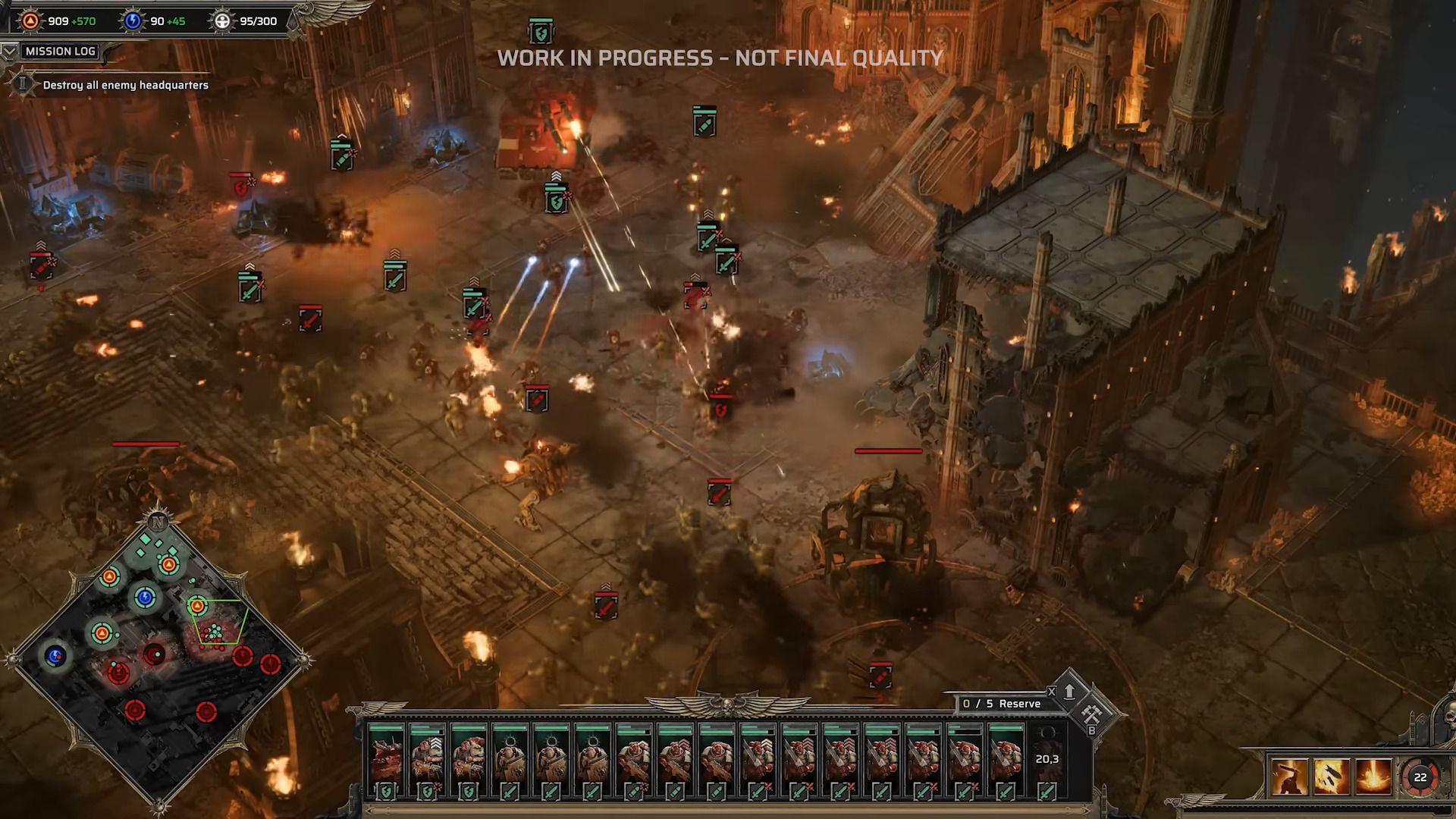
Warhammer 40,000: Dawn of War 4 creative director explains how core 40K tabletop features like ‘Armor of Contempt’ were adapted to the RTS — ‘It’s not the same mechanic, but it does kind of the same t
0TechRadar

'The progress is real': Deloitte report claims some firms are finally seeing return on AI investment — but still lack insight into what actually works
0TechRadar

Hideo Kojima says AI can’t replace human craftsmanship in video games
0TechRadar