AI & ML
SEROA: Stable Encrypted-Traffic Representation and Online Adaptation for Service-Aware Networks
arXiv cs.NI0 views
arXiv:2611.07550v1 Announce Type: new Abstract: Mobile networks are evolving toward service-aware operation to support heterogeneous applications with diverse quality-ofservice (QoS) and quality-of-experience (QoE) requirements. In practice, however, the widespread use of encryption makes service types difficult to observe directly, which limits the deployment of service-aware optimization in operational networks. Recent raw-byte representation learning methods have improved offline encrypted-traffic classification, but their robustness in realistic deployment remains limited due to temporal drift and the lack of explicit labels for online adaptation. This paper proposes Stable Encrypted-Traffic Representation and Online Adaptation (SEROA), a deployment-oriented framework for encryptedtraffic classification in service-aware mobile networks. In the offline stage, SEROA exploits protocol structure to learn temporally stable representations by applying masked modeling to stable fields, protocolaware transformations and contrastive learning to unstable fields, and time-adversarial learning to suppress time-specific cues. In the online stage, SEROA uses feedback records containing QoE measurements, wireless states, and allocation decisions to update the deployed classifier through contextual-bandit learning. Experiments show that SEROA consistently outperforms representative pretrained baselines under both random and time-based evaluation protocols, and remains effective under QoE-driven online adaptation. These results demonstrate the value of stable representation learning and online adaptation for practical service-aware mobile networks.
Source:https://arxiv.org/abs/2611.07550PreviousWhen Does Blockwise Additivity Break? Diagnosing and Repairing the Additive Assumption in Distillation-Based Architecture SearchNextInstantiating the Knowledge Plane
Related posts

I’ve reviewed almost every Android foldable this year — here’s how the iPhone Duo compares
0The Verge

Physicl raises $10M to make the digital world real enough for robots
0TechCrunch

Kubernetes, mark II? Why Google’s giving away gVisor, a code sandbox used by Anthropic and OpenAI
0The New Stack

AI helps find better recipes for 3D-printing titanium parts
0Phys.org Tech

Newly-developed paint could keep your home cooler and lower energy bills
0Phys.org Tech
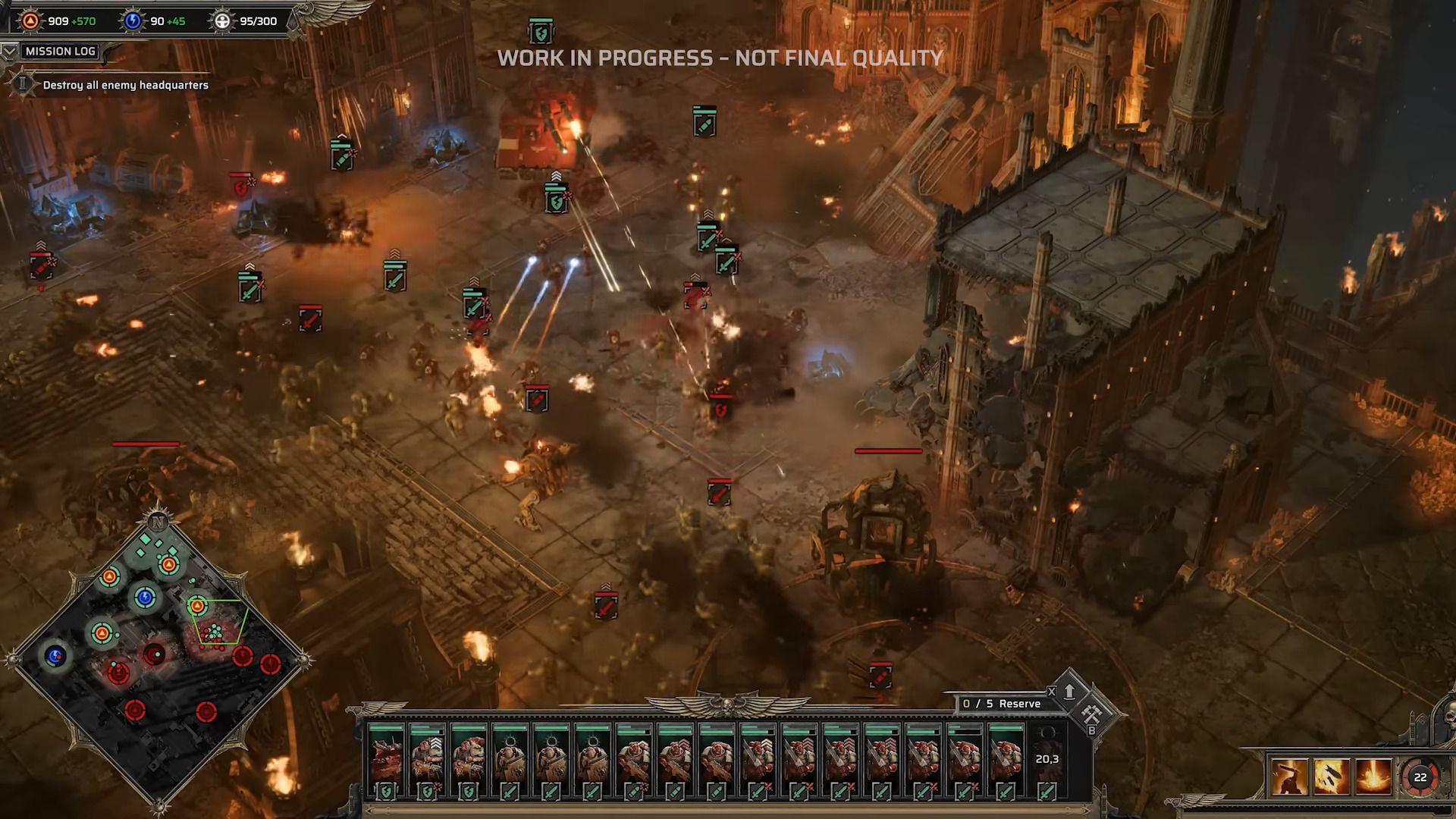
Warhammer 40,000: Dawn of War 4 creative director explains how core 40K tabletop features like ‘Armor of Contempt’ were adapted to the RTS — ‘It’s not the same mechanic, but it does kind of the same t
0TechRadar