Backend
AiXapply: Fast and Reliable Full-File Code Integration with Specialized Small Models for IDE Workflows
arXiv cs.SE0 views
arXiv:2611.07634v1 Announce Type: new Abstract: Large language models increasingly assist developers by proposing small code edits, yet reliably integrating a partial update snippet into an existing file while preserving unrelated content remains poorly supported by current code-generation workflows. We formalize the Code Integration (Apply) task as follows: given an original file and an update snippet, the system must produce the complete merged file while preserving all content outside the requested edit. We construct a high-quality multi-language dataset from real commits via a structured pipeline that converts code changes into update snippets paired with full-file ground truth and enforces consistency through verification and filtering. We then train a specialized 4B model, aiXapply, using supervised fine-tuning and reinforcement learning (GRPO). The supervised variant achieves 94.4% accuracy under our language-aware comparison, surpassing a strong large-model (Deepseek-V3.2) baseline (91.6%). Speculative decoding enables aiXapply-RL to reach $\sim$2700 tokens/s on a single A100 in a decoding subset; on the full benchmark, it achieves roughly 75$\times$ lower latency than the API-served Deepseek-V3.2 baseline. We further conduct an industrial deployment of aiXapply-RL in the aiXcoder IDE plugin as a dedicated Apply service, reducing mean Apply latency from 50 seconds to 1.89 seconds by offloading full-file generation from the upstream large model. Under time-based capacity planning, replacing one of five upstream serving instances would save 20% of upstream machine cost before the additional shared A100 service cost. Overall, our results demonstrate that treating code integration as a standalone task enables small models to achieve high accuracy, practical efficiency, and concrete industrial benefits in real-world IDE workflows where latency, cost and privacy are critical.
Source:https://arxiv.org/abs/2611.07634PreviousEvolver: Turning Agent Exploration into Evolving CapabilitiesNextWhat the Middleman Delivers: Answer Behavior, Tool Permissions, and Billed Usage in LLM API Relays
Related posts

Absolute vs Relative Imports in Python
0Real Python
Thonny: The Beginner-Friendly Python Editor
0Real Python
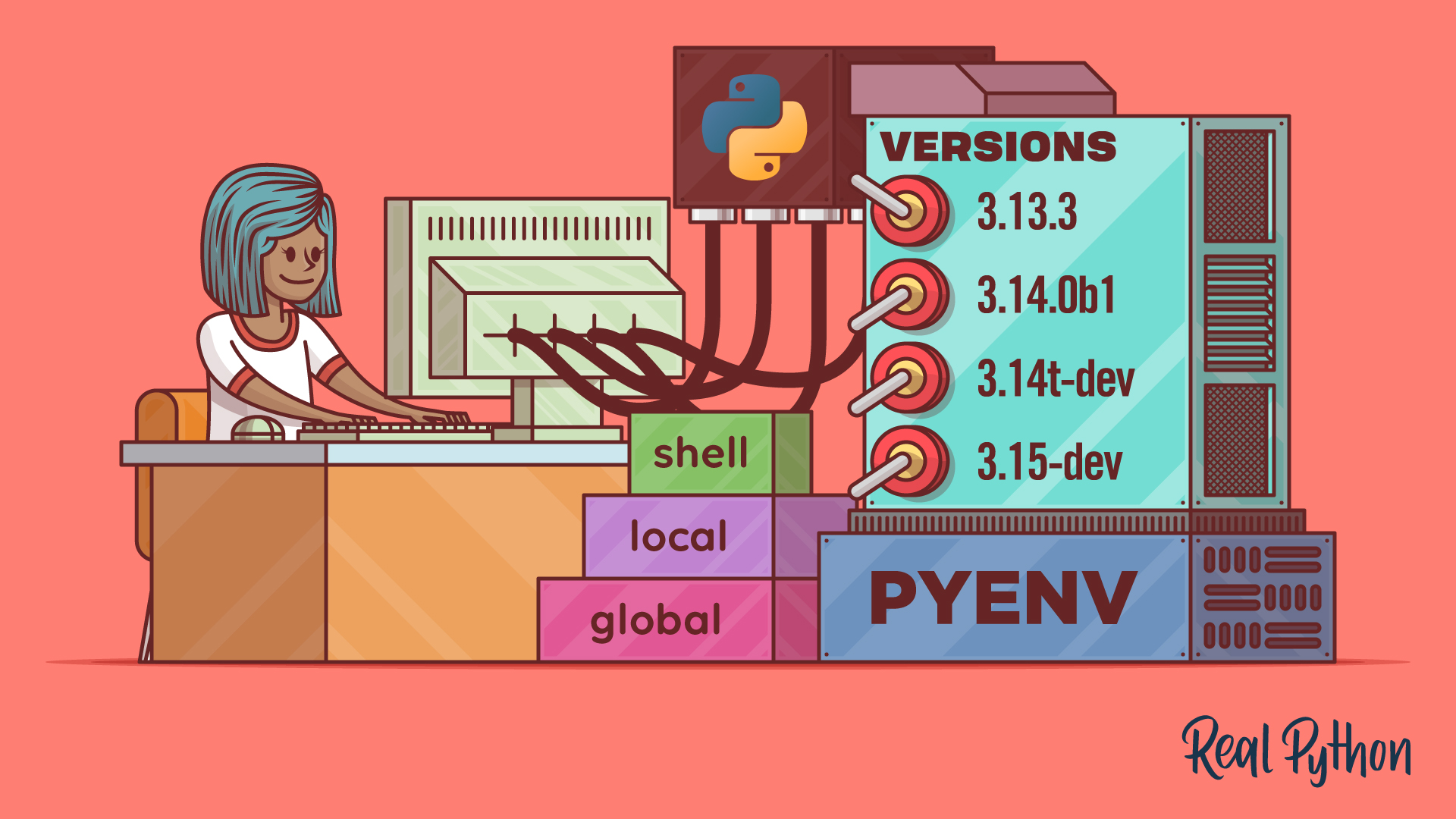
Managing Multiple Python Versions With pyenv
0Real Python

Agentjacking: A Fake Sentry Error Became a 'Fix' That Claude Code and Cursor Ran
0dev.to

How osFoundry detects that Claude Code is waiting on a permission prompt
0dev.to

A staging task that reached production started with a token in the wrong file
0dev.to