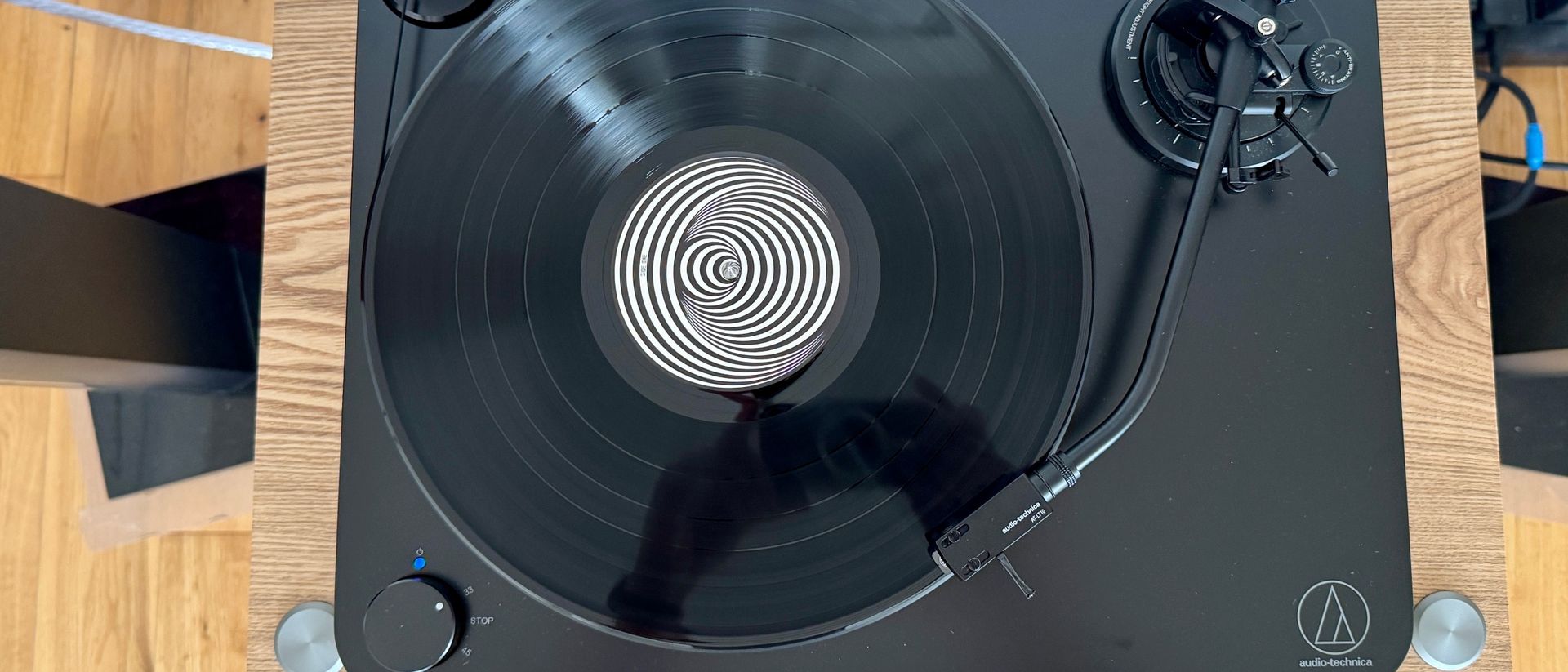
Audio-Technica AT-LP7X: Two-minute review
For a company that’s been turning out high-quality turntable cartridges since the early 1960s, Audio-Technica certainly took its sweet time to begin manufacturing record players. Unless you count the ‘Sound Burger’ of the late 1980s (which I don’t, despite its re-release), it was the back end of 2009 before Audio-Technica delivered a turntable — but since then the dam has broken, and now the Japanese specialist is one of the most credible names around when it comes to record players at real-world money.
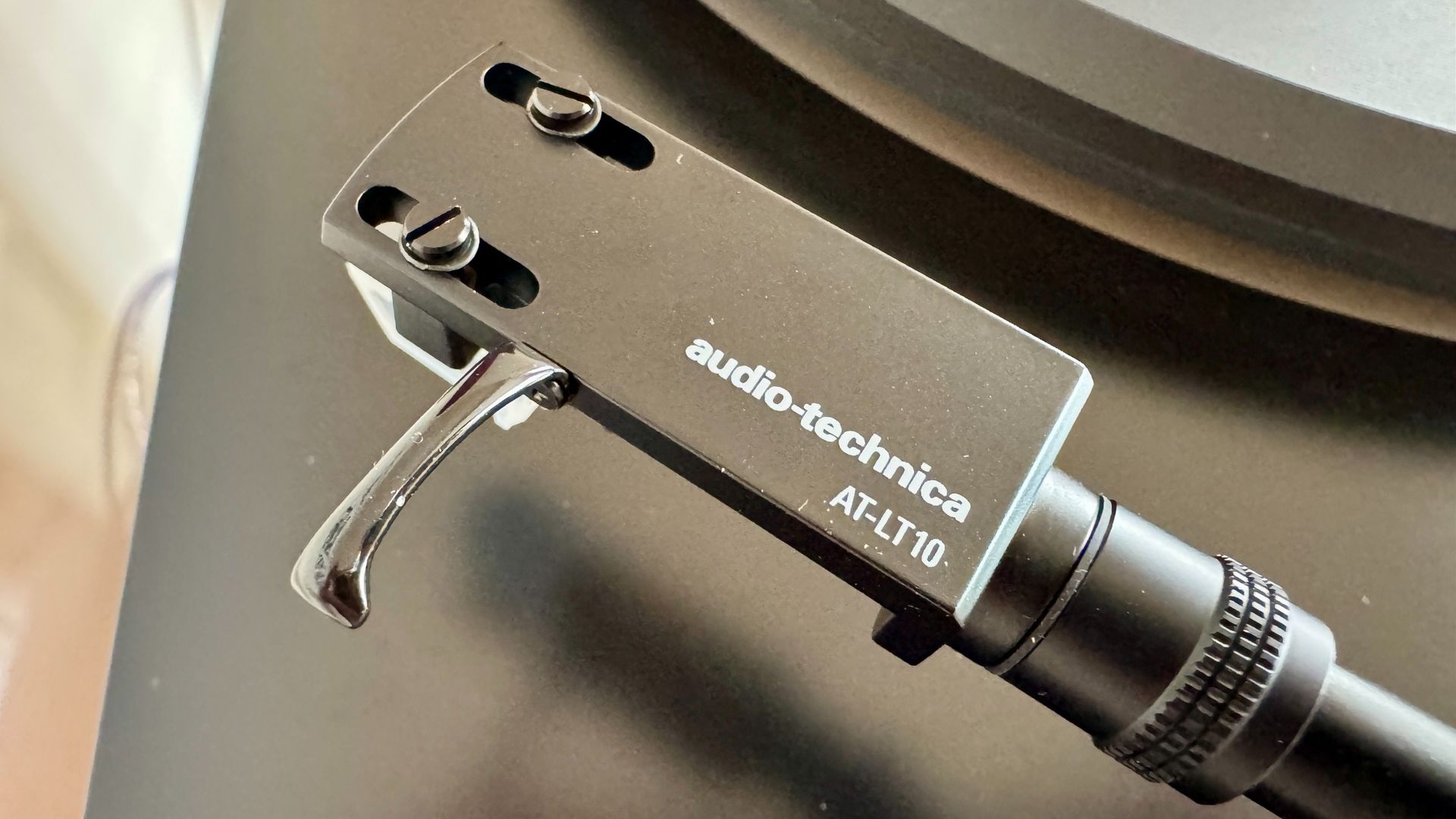
The AT-LP7X comes complete with the company’s AT-LT10 headshell and AT-VM95E MM cartridge attached — and also with a switchable moving magnet / moving coil preamplifier on board too. All of which means that setting up this record player is about as straightforward as it gets. And it’s compatible with just about any audio system you care to mention.
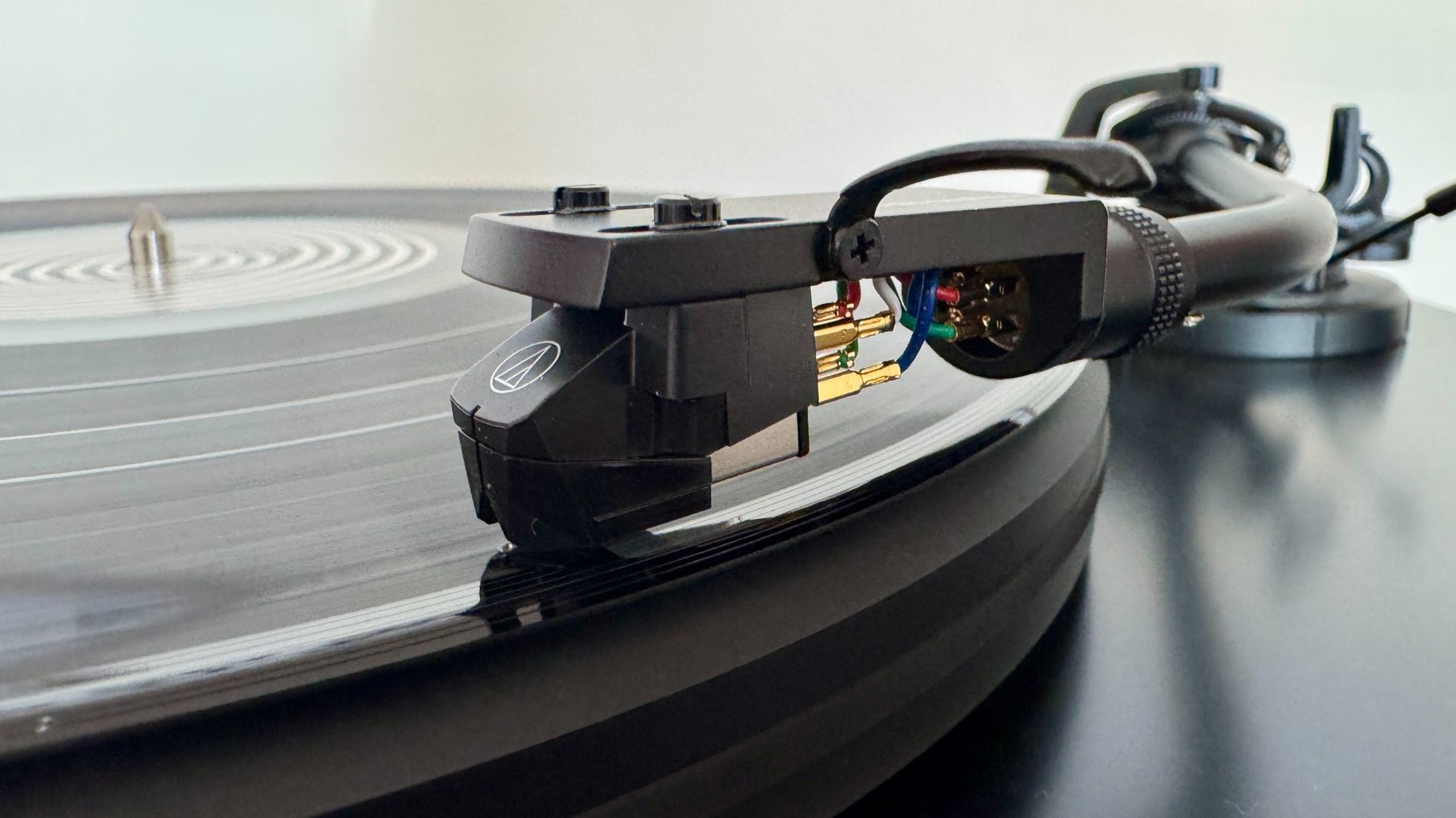
The quality of build and finish is well up to the standard this asking price demands, the height-adjustable isolation feet are another welcome feature, and the fully detachable dust-cover doesn’t harm the perceived value of the AT-LP7X either.
It’s not the most exciting listen, the Audio-Technica, and those who prefer a vigorous and/or front-foot attitude to their music will find it a little more laid-back than is ideal. The rest of us, though, will find quite a lot of solace in the turntable’s ability with detail retrieval and with rhythmic expression, in its even-handed attitude to frequency response and its careful lack of influence where tonality is concerned.
Audio-Technica AT-LP7X Review: Price and release date
- Launched on January 6, 2026
- Costs $999 / £699 / AU$1,799
The Audio-Technica AT-LP7X is on sale now, and in the United Kingdom it costs £699. It sells for around $999 in the United States, while in Australia you’re looking at AU$1,799 or thereabouts.
This makes it a deck for Proper Vinyl People, rather than an entry-level turntable (something that might even have some amplification in the plinth and some speakers bundled in the box), so its closest competition for the money is something along the lines of the Rega Planar 3. Take note though: unlike the A-T you've come here to read about, the Rega option won't come supplied with a cartridge — or even a preamp…
Audio-Technica AT-LP7X review: Features
- Integrated, switchable MM/MC phono stage
- J-shaped tonearm with AT-LT10 headshell and AT-VM95E MM cartridge
- Dual-axis gimbal
Any list of ‘features’ tends to be quite same-y when you’re discussing belt-drive turntables that sell at a realistic price. So the fact that the AT-LP7X has one more feature than is the norm is something worth discussing…
On the rear of the plinth, close to the stereo RCA left and right outputs, there are a couple of small switches. One is marked ‘phono/line’, the other ‘MM/MC’ — switch the first to ‘line’ and you engage the Audio-Technica’s integrated preamplifier, which amplifies the outbound signal to the point it can be connected to any amplifier, powered speaker or what-have-you with a line-level analog input.
The other switch allows you to tell the preamplifier if the turntable is fitted with a moving magnet or moving coil cartridge so it can adjust itself accordingly. And this is refreshingly unusual and welcome.
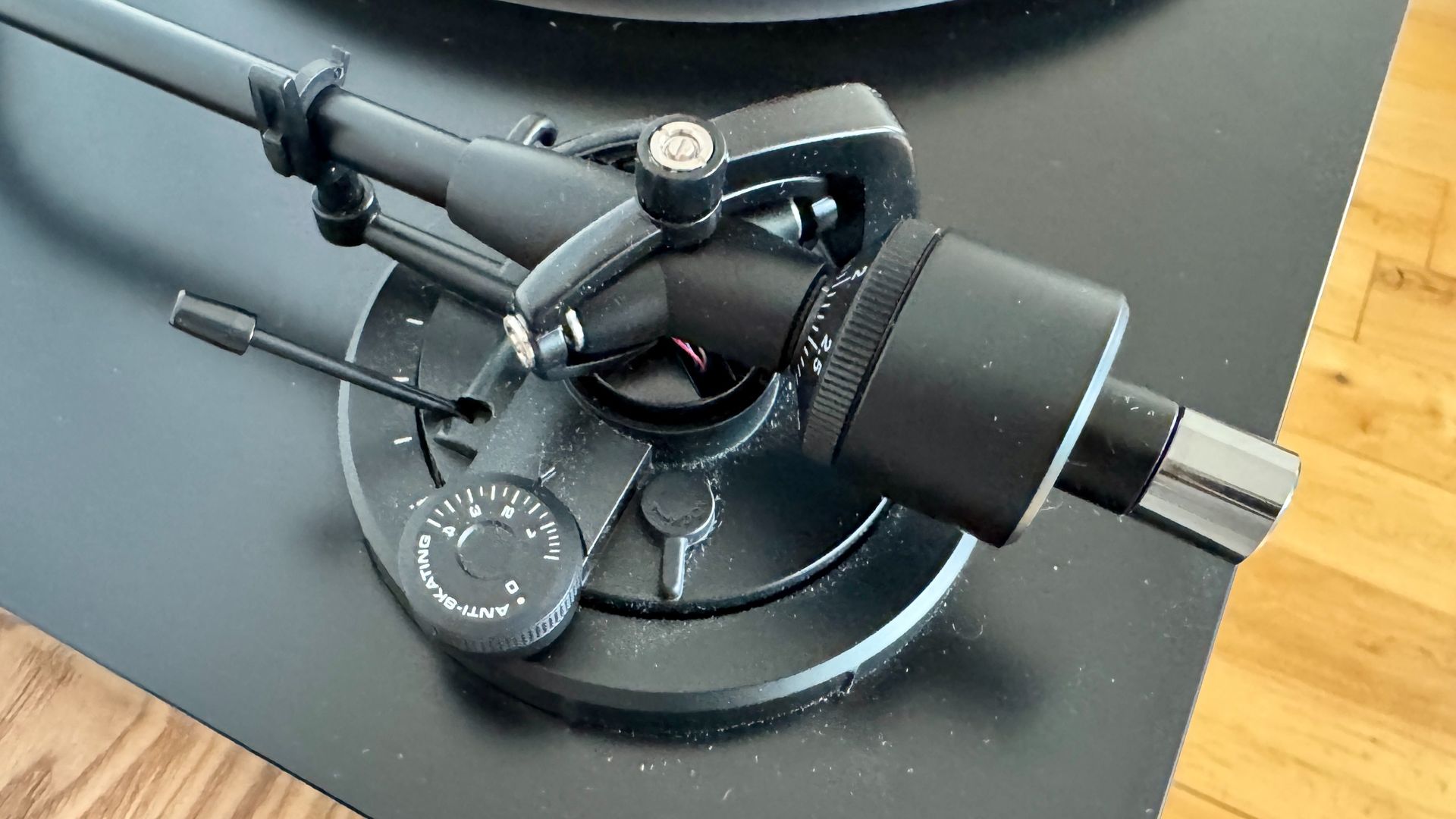
When it arrives, the AT-LP7X is supplied with a moving magnet cartridge — one of Audio-Technica’s well-regarded AT-VM95E designs. It’s prefitted to an AT-LT10 headshell positioned at the end of a 247mm J-shaped tonearm, and is preadjusted too. The tonearm features a dual-axis gimbal (to keep tilting to an absolute minimum) and has manual adjustment for tracking, height and counterweight integrated.
The set-up guide provided by Audio-Technica is admirably clear and succinct, and anyone with even remotely steady hands will be able to bring the AT-LP7X to a state of readiness in next-to-no time.
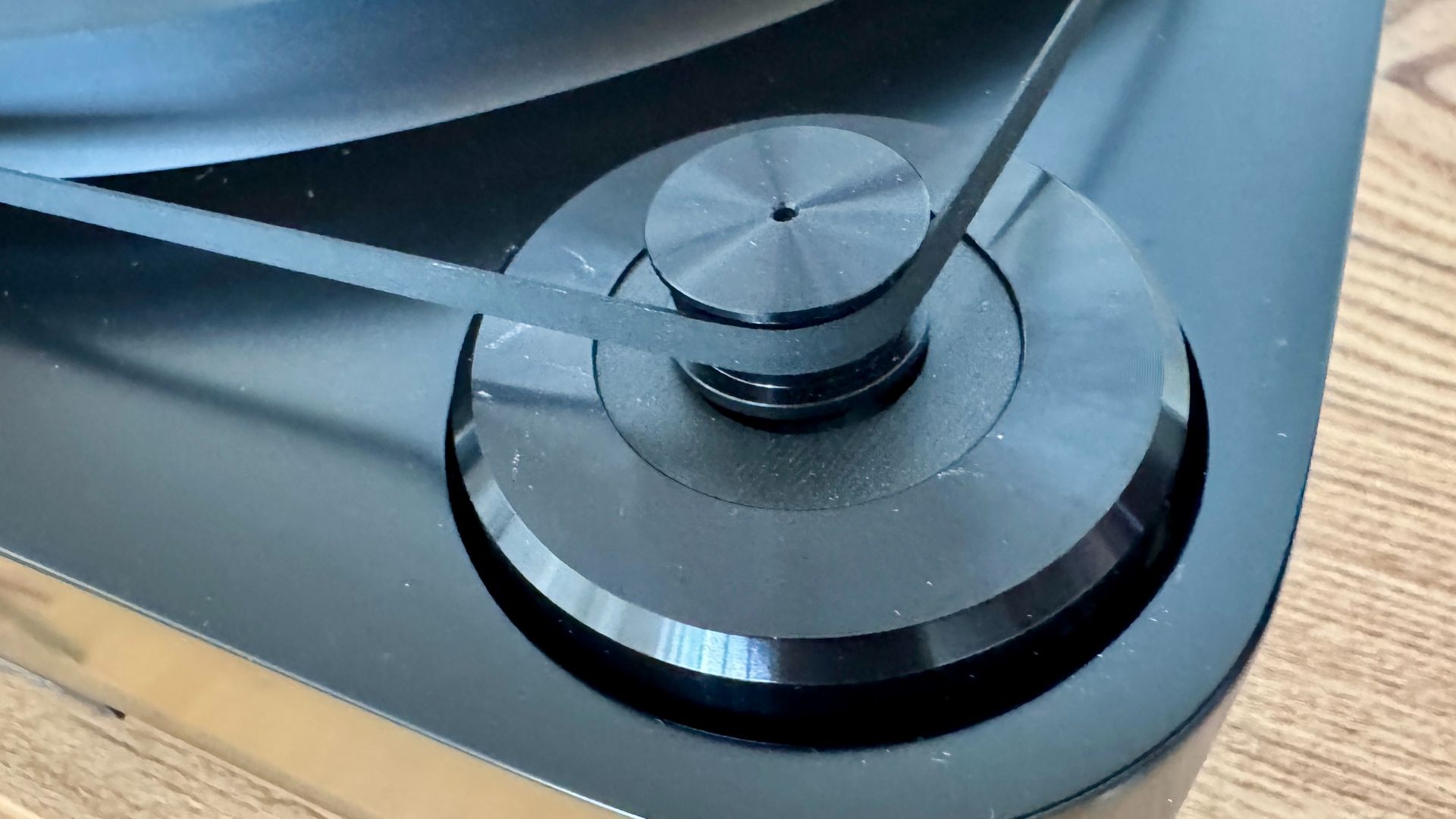
This is a belt-drive turntable with automatic speed adjustment — there’s a large rotary dial on the plinth that has ‘33’, ‘45’ and ‘stop’ positions, so there’s no need to faff around with the belt or what-have-you in order to change speeds. Speed is governed by an optical sensor-monitored motor designed to ensure rotational accuracy; to minimise the transmission of mechanical noise and/or vibration, it’s decoupled from the plinth by rubber bushings.
The stainless steel spindle has a thermal-plastic, sheet-type bearing to further help maintain precise rotational speed. Power comes via an external switching supply that isolates AC-to-DC conversion away from the turntable to suppress electrical interference.
- Features score: 5 / 5
Audio-Technica AT-LP7X review: Sound quality
- Smooth frequency response and even tonality
- Good low-frequency control
- Phono stage could be more involving
Use the AT-LP7X’s integrated phono stage to preamplify the signal on its way to an amplifier and there’s plenty to enjoy about the way the Audio-Technica goes about delivering music. No matter if it’s the opaque simmer of Bob Dylan’s Love Sick or the relentless build of ØXN’s Cruel Mother, this turntable is an even-handed and informative listen.
It certainly has a handle on frequency response. The low frequencies it generates could be a little less soft, it’s true, but in terms of allowing each area of the frequency range a similar amount of emphasis the AT-LP7X is an assured performer. It’s not especially keen on sticking its oar in where tonality is concerned, either — there’s a nicely neutral balance to the sound that allows the source material to dictate terms in this respect.
Despite the slight lack of substance at the bottom end, bass sounds are nicely controlled and there’s the facility with rhythmic expression that vinyl-fanciers routinely hold up as a major virtue of the format.
The midrange is open and informative, and the differences in timbre, character and technique between the two vocalists previously mentioned are made absolutely plain. At the top end there’s a serving of polite attack, and just enough bite and crunch to treble sounds to keep things interesting.
The Audio-Technica describes a reasonably well-defined soundstage and can position the participants in a recording on it with a fair amount of confidence. ‘Reasonable’ is an equally fair way to describe the AT-LP7X’s facility with dynamics, too — the ØXN recording builds in volume and intensity tenaciously, and this turntable does more than allude to these upshifts while stopping short of giving them full expression.
It’s more adept when it comes to detail retrieval, needing no qualification as to how impressively it handles the weighting and contextualisation of even the most minor occurrences in a recording.
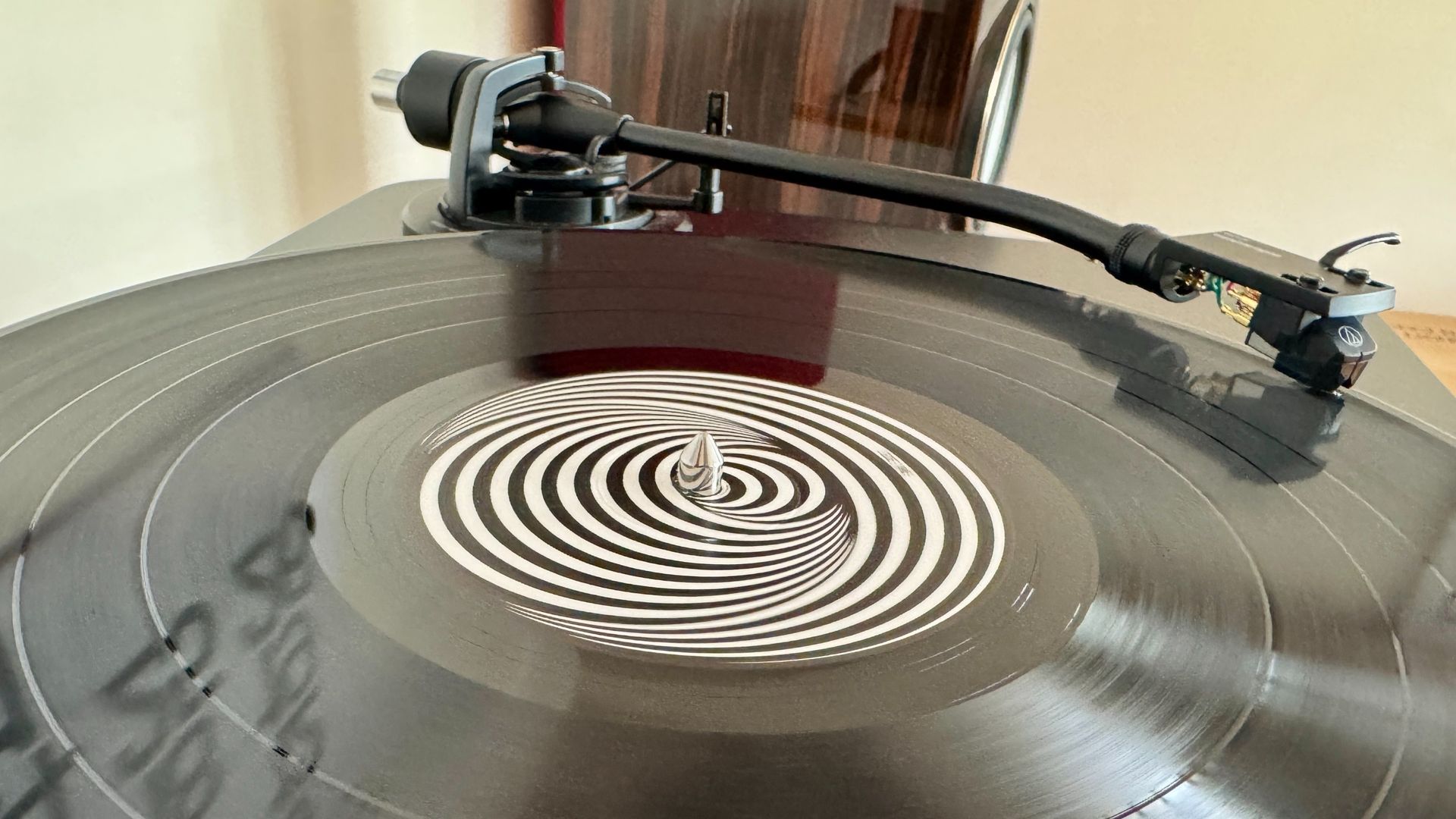
The Audio-Technica’s overriding character is a little uninvolving, though — it presents music in a rather matter-of-fact way that has apparently traded excitement for a desire not to cause a fuss.
Some, but not all, of this attitude can be blamed on the integrated phono stage. Switch it off and instead connect the the AT-LP7X to a decent external alternative (an elderly Leema Elements, say, or a newer Pro-Ject Phono Box) and while it doesn’t suddenly turn the Audio-Technica into a snappy front-foot ball of energy, it certainly serves to bring a little more animation to the sound. All the things the turntable does well remain present and correct, but its attitude becomes a little more lively, a little more interested — and a little more interesting as a result.
- Sound quality score: 3.5 / 5
Audio-Technica AT-LP7X review: Design
- 157 x 450 x 352mm (HxWxD, inc. dust-cover)
- MDF plinth, acrylic platter
- Spring-based, height-adjustable isolation feet
No one in their right minds attempts to mess with the established design of a record player, of course — not unless they’re trying to justify some stratospheric asking price, anyway. And so with the AT-LP7X Audio-Technica has stuck closely to the long-established ‘rectangle with a circle on it’ template. The slightly curved corners of the plinth are as close as the company has come to deviating from the norm.
But just because the AT-LP7X hasn’t been ‘designed’ so much as ‘built’, that doesn’t mean Audio-Technica has withheld care and attention. The MDF plinth is very nicely finished, and stands on four hefty height-adjustable spring-based isolation feet that offer good isolation from external vibration to the main body. The 20mm platter is acrylic, and so smoothly finished that a slip-mat is an option rather than a necessity — its high-density design is yet another attempt to dampen vibration down to a bare minimum.
The AT-LP7X is supplied with a smoked Perspex dust-cover. This fits tidily around the plinth, and lifts all the way off rather than being hinged. With the dust-cover in place, the entire thing tips the scales at 7.6kg.
- Design score: 5 / 5
Audio-Technica AT-LP7X review: Usability and setup
- Adjust anti-skate and counterweight
- Select ‘phono’ or ‘line’ output
- Connect to amplifier or powered speaker
Audio-Technica has tried to make setting up the AT-LP7X as simple as possible. The tonearm already has its headshell and cartridge attached, and it’s pre-adjusted, so you need only dial in the appropriate amount of anti-skate and adjust the counterweight as per the set-up instructions. This is the work of just a moment or two, and then you’re good to go.
Or, at least, you are once you’ve connected the turntable to the mains and to your amplifier (or similar) using a pair of analogue RCA cables — Audio-Technica supplies all the necessary. Then select either ‘phono’ or ‘line’ output at the rear of the plinth (depending on whether or not your amplifier has a phono-level input) and make sure the other switch is set to ‘MM’ (if you’re using the supplied AT-VM95E cartridge).
To use the AT-LP7X, it’s just a question of getting the platter spinning at the correct speed and then carefully lowering the needle onto the vinyl. This is ancient technology by the standards of home entertainment, and there’s precious little complexity to it where the end user is concerned.
- Usability and setup score: 5 / 5
Audio-Technica AT-LP7X review: Value
If you need a phono stage to amplify the sound of that record player you’re thinking of buying, the AT-LP7X makes a lot of sense. Not only is it well-made and painless where set-up and operation are concerned, it’s got an integrated phono stage that can handle both moving magnet and moving coil cartridges — the value for money it offers in this respect is obvious.
If your system already features half-decent phono amplification, though, the Audio-Technica is not quite as compelling — because you’re spending money on a feature you’re unlikely to use once you’ve done the obligatory A/B comparison…
- Value score: 4 / 5
Should I buy the Audio-Technica AT-LP7X?
Buy it if...
You admire a bit of convenience
With a good cartridge pre-fitted to a very decent headshell, a lot of the AT-LP7X set-up process is taken care of at the factory
Your system doesn’t have a phono stage
Don’t have the necessary oomph to amplify a record player? No problem, the Audio-Technica supplies its own
You are easily startled
The AT-LP7X is so laid-back it’s almost horizontal, so there will be no sudden surprises
Don't buy it if...
Your system has a decent phono stage
There’s no point in spending money on a feature you don’t need
You own any 78rpm discs you’d like to play
The Audio-Technica’s platter cannot turn that fast
You fancy some sonic excitement
The AT-LP7X would much rather soothe than invigorate; its overall attitude is not especially involving
Audio-Technica AT-LP7X : Also consider
Rega Planar 3
A Rega Planar 3 is almost exactly the same price as the AT-LP7X, although that doesn’t get you a cartridge, let alone an integrated phono stage. What it does get you (once an appropriate cartridge has been fitted and once it’s connected to a system with sufficient amplification) is a staggeringly complete and thrillingly engaging account of the music you’re listening to. Read our full Rega Planar 3 review.
Pro-Ject Debut Pro
The Pro-Ject Debut Pro is very, very similar money too — and although it doesn’t have a phono stage, it does at least come with a very decent cartridge. And as is the Pro-Ject way, it sounds taut and precise, with a really impressive facility for insight and detail as well as the more common vinyl virtue of rhythmic positivity.
Read more on the Pro-Ject Debut Pro.
How I tested the Audio-Technica AT-LP7X
I tested the AT-LP7X in two ways. Firstly with its integrated phono stage switched on, and connected to a line-level analog input on an Eversolo DAC-Z10 preamplifier — this in turn is connected to a Cambridge Edge W power amplifier driving a pair of Bowers & Wilkins 705 S3 Signature standmounting loudspeakers.
And then with the phono stage switched off and the connection from the turntable running to a Pro-Ject Phono Box preamplifier before being sent on to the Eversolo.
And then I listened to more records than was, strictly speaking, necessary.
- First reviewed: October 2026
- Read TechRadar's review guarantee