AI & ML
Hierarchical Incremental Beta Splatting for Online Reconstruction
arXiv cs.GR0 views
arXiv:2611.08288v1 Announce Type: cross Abstract: Online 3D Gaussian Splatting reconstructs a scene during capture: each keyframe spawns primitives once and refines them for only a few dozen iterations, leaving little chance to fix poor initialization or missing detail. Gaussians are also inherently soft, needing many overlaps for solid surfaces. We present Hierarchical Incremental Beta Splatting (HIBS), which brings beta kernels to incremental reconstruction. Their shape parameter interpolates between a soft, Gaussian-like profile and a flat-topped, near-opaque surfel, acting as a confidence dial for geometry. Our confidence-aware spawning uses geometric observability and multi-view depth agreement to initialize both opacity and shape, producing solid primitives where geometry is verifiable and soft, correctable primitives where it is not. As online densification, error-driven relocation recycles stale primitives into photometric-error hotspots. Bounded beta kernel support enables exact tile culling and faster rasterization, and a closed-form, shape-preserving merging formulation provides a level-of-detail (LOD) hierarchy for fast optimization and real-time rendering. On Mip-NeRF 360 in the on-the-fly protocol, HIBS improves PSNR by up to 0.8 dB while reducing optimization time by up to 40%. Project page: https://linus-franke.com/hibs/
Source:https://arxiv.org/abs/2611.08288PreviousStructure from Collision via Hypothesis-Space ReasoningNextOmniFaceRig: Fully Automatic Inner-Mouth-Aware Face Rigging Across Diverse 3D Character Topologies
Related posts
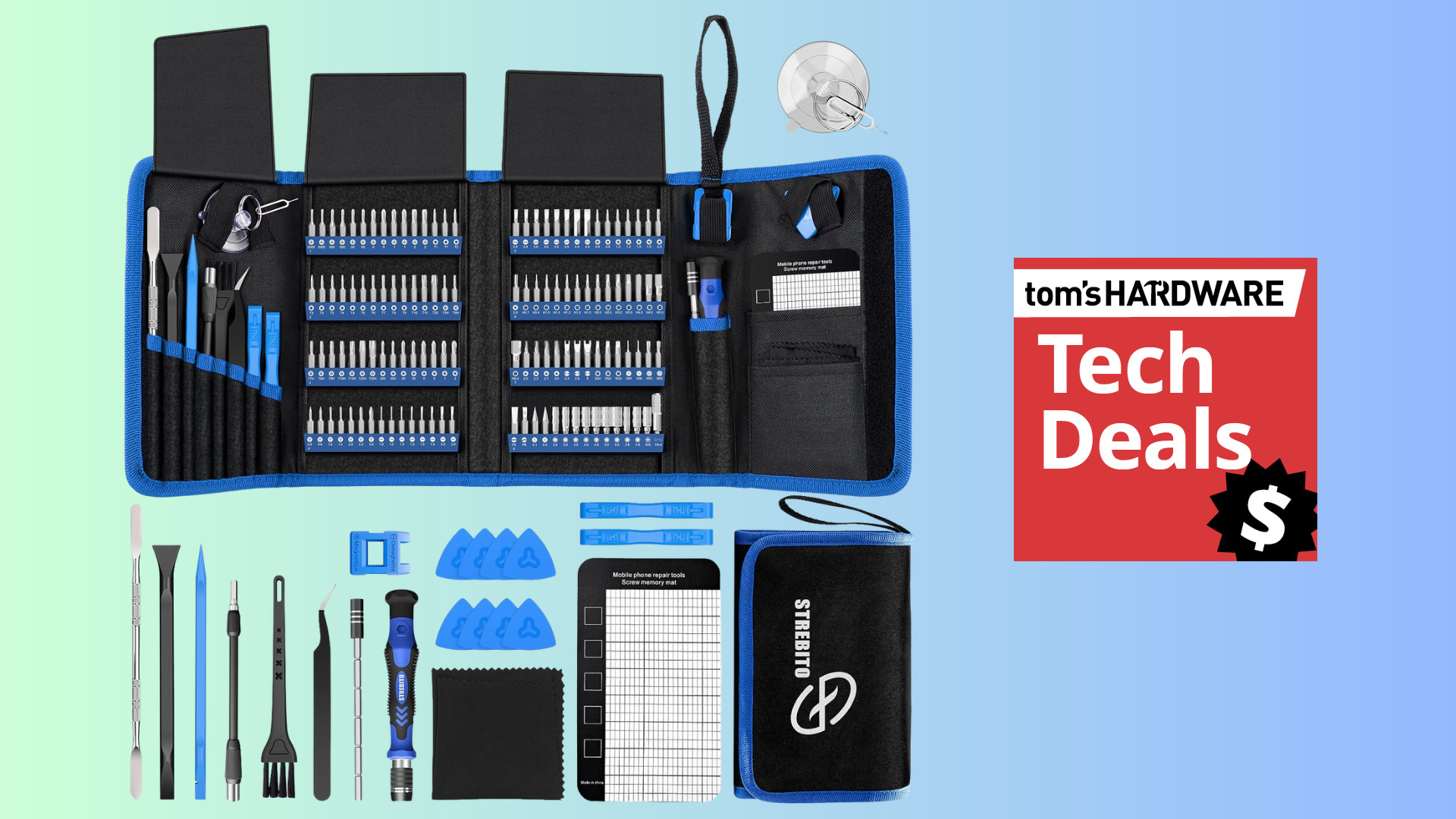
Save 26% on this 142-piece toolkit for your PC repairs and hobbyist projects, now under $28
0Tom's Hardware

‘Mathematics is more than a mechanical process’ — why I think the field will survive OpenAI’s disruption
0Nature News

Preprint platform offers to pay researchers to review papers, but questions remain
0Nature News

I’ve reviewed almost every Android foldable this year — here’s how the iPhone Duo compares
0The Verge

Physicl raises $10M to make the digital world real enough for robots
0TechCrunch

Kubernetes, mark II? Why Google’s giving away gVisor, a code sandbox used by Anthropic and OpenAI
0The New Stack