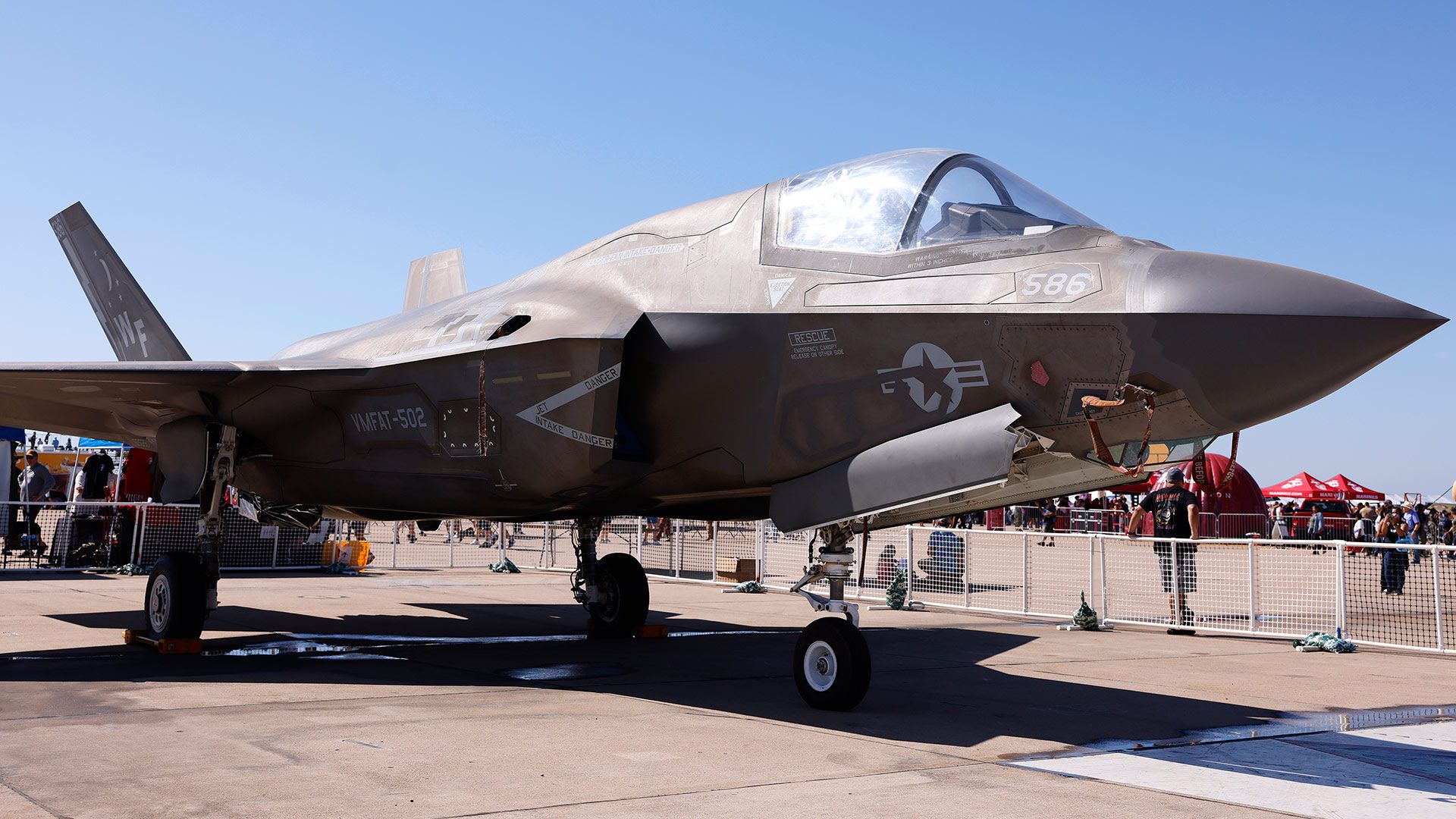
The Pentagon is struggling to track an astonishing 26 million F-35 warfighter parts, worth an estimated $31 billion, according to analysis published by the Government Accountability Office (GAO) this week. In its report — published just weeks after China purportedly swiped a classified shipment of F-35 parts diverted through Hong Kong — the GAO criticized the current inventory system as “outdated, inaccurate, and incomplete.” Possible solutions were also provided by the GAO; however, the implications are that the most advanced and costly fighter jets in U.S. history may not be ready and reliable due to inventory management deficiencies.
Inventory problems have been a long-standing feature of the deployment of the F-35, notes the source. The F-35 program is estimated to cost $1.9 trillion over its lifecycle. It is the most costly weapon system in history, says the GAO. But the Department of Defense (DOD) has “long-standing and ongoing deficiencies related to the accountability and financial reporting of F-35 parts,” asserts the watchdog.
Chief among the issues that need to be addressed is the headlining massive unmonitored pool of roughly 26 million spare parts. These are spread among 700 government and contractor facilities worldwide, but the technology for managing massive inventories has existed for decades.
We might have seen a telling symptom of the inadequate F-35 parts tracking system back in September. A communications and/or accountability breakdown resulted in a UPS worker routing top-secret parts through Hong Kong to save time. They were allegedly swiped by China after an employee is thought to have missed an email warning not to divert the parts.
“Minimal progress” since 2019
Frustratingly, this is the third report since 2019 from the GAO, and the latest published report complains that the DOD has “made minimal progress” in implementing past recommendations. For example, in a 2022 report, periodic physical inventories of F-35 parts were recommended but have not been implemented yet, notes Stars and Stripes. There is also no reliable procedure for verifying data from prime contractors, which can be “inaccurate and incomplete.”
Currently, it is believed that there are over 1 million parts, worth more than $85 million, that are lost or missing. Moreover, about 17,000 parts that have been sent in for repair, worth as much as $42.5 billion, aren’t tracked.
“Live connection” inventory system
Stars and Stripes mentions that the Pentagon is working on “a live connection” for the F-35 Joint Program Office (JPO), bridging its inventory software and that of prime contractors with F-35 parts. The JPO asserts that it is now modernizing its infrastructure with direct real-time interfaces. “This integration directly addresses previous system gaps to ensure seamless accountability of F-35 spare parts,” said a JPO spokesperson, quoted by Breaking Defense.