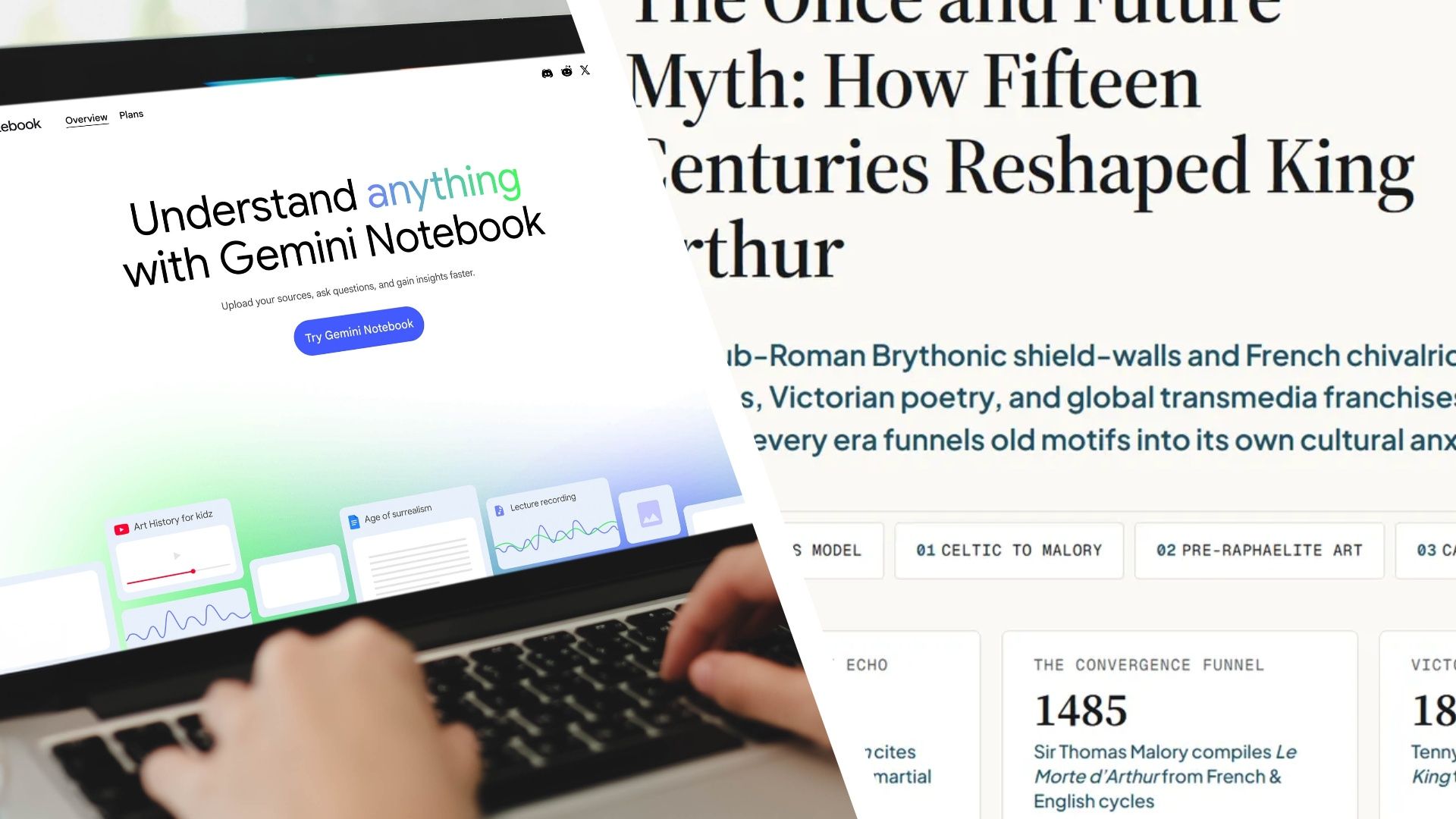
Google has given its Gemini Notebooks a new way to translate its AI-powered research into a more flexible format. You can transform a collection of notes and research into an interactive website simply by describing what you want, making the usual AI-generated summaries look a little old-fashioned.
The websites take the research stored in Gemini Notebook, formerly known as NotebookLM, and produce an easy-to-navigate site. There's no coding or design involved. You just need a rough idea of what you'd like to create.
To try it, open Gemini Notebook, create a notebook, and add your research material from the internet or uploaded documents. Then type "make me a site" into the chat and describe the kind of website you want, then open the generated result to explore it. You can open the finished website separately from the notebook and share it with others.
Artistic story
I tried it out using research on the history of King Arthur stories over the centuries. Specifically, I asked the AI to "Make me a site full of visually engaging and interactive elements showcasing the many forms and styles of Arthurian lore." I didn't specify the layout or explain which interactive features to include. I wanted to see how much Gemini could figure out for itself.
The website Gemini produced from that prompt took about five minutes to finish, and the results were better than I expected, if not quite a finished product. The Once and Future Myth: How Fifteen Centuries Reshaped King Arthur is definitely more than just text. Take a look!
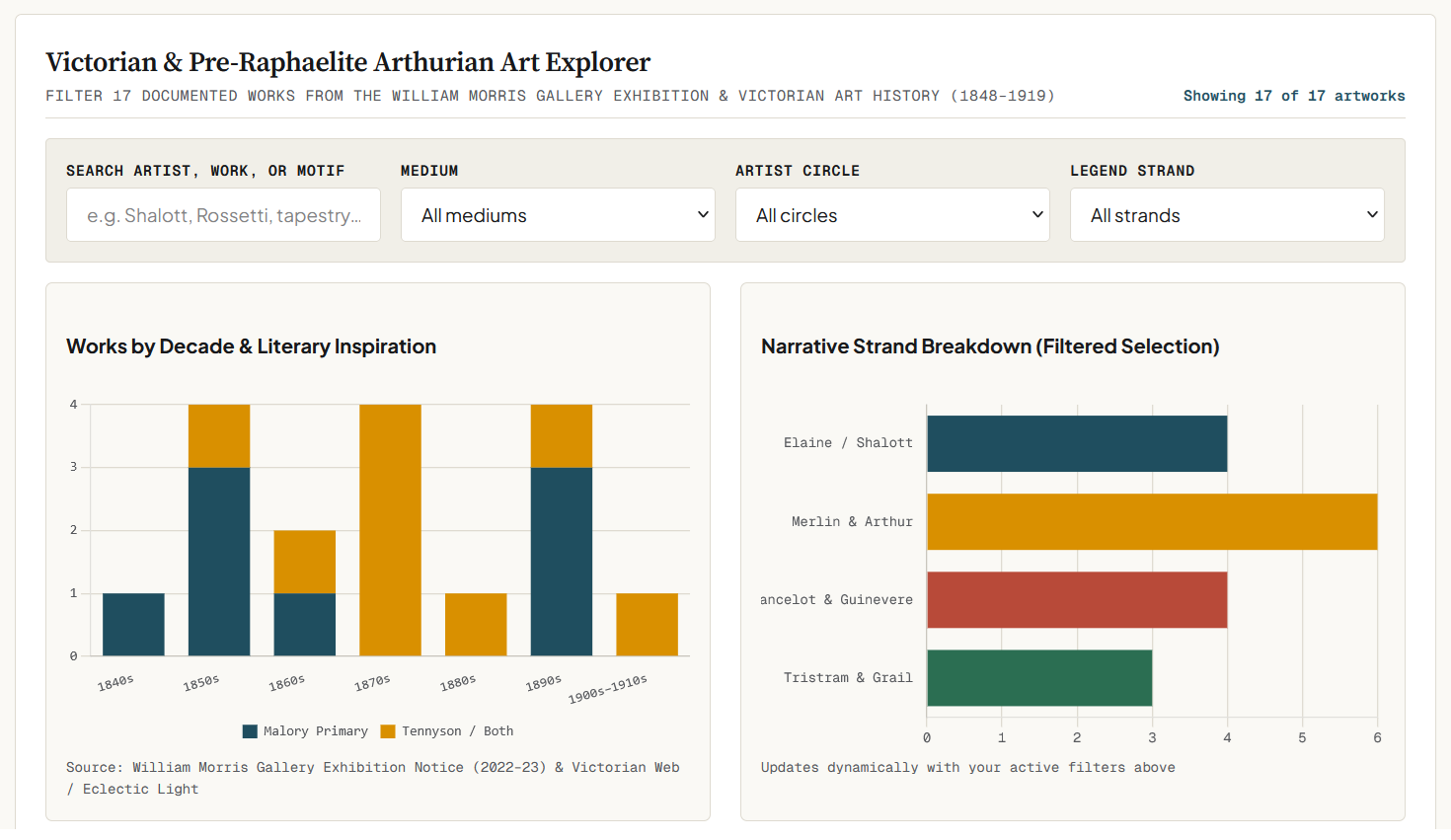
The website offers a full interactive guide presenting the evolution of the legends as a series of stages through history and broken up into different elements, characters, and media. The most impressive section might be the one devoted to Victorian interpretations of Arthurian legend. Gemini created a searchable collection of 17 artworks, with filters for the type of artwork and the stories they depict. It also included charts showing how those works were distributed across different periods, turning a fairly specialized subject into something that was easy to investigate.
Another section compared the BBC television series Merlin with traditional Arthurian stories. It examined where the show preserved familiar elements and where it deliberately changed them. Some of the charts don't seem to be particularly useful, but they are certainly as colorful and adjustable as requested.
Camelot online
I was particularly impressed that Gemini had created all of this from such a broad instruction. I hadn't requested an hourglass diagram or asked for searchable artwork collections, yet both made sense for the subject. The result felt as though the AI had considered how someone might actually want to explore the information rather than simply finding ways to decorate it.
There are limitations, of course. Some of the historical claims are quite specific, and a polished website can make questionable information appear more authoritative than it deserves. I'd want to check important details against the original sources before using the site as an educational reference, particularly where the history of Arthurian literature remains disputed.
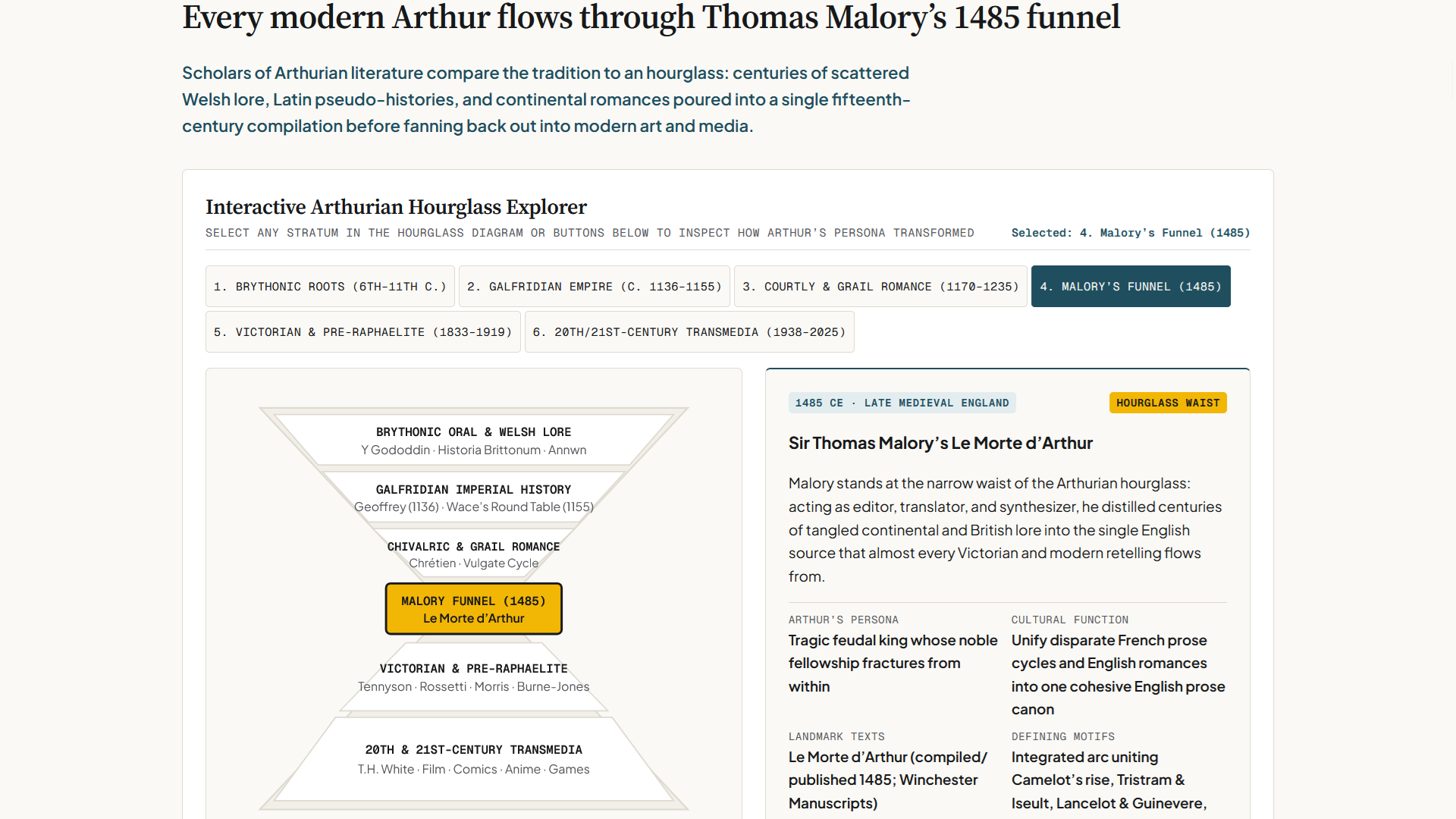
The website is also more like an interactive research publication than a conventional personal website. That's perfectly suited to my experiment, but someone hoping to create a business homepage or an online store would have different requirements.
My Arthurian website isn't perfect, and I'd still want to check its claims before sharing it as an authoritative resource. But I was genuinely impressed by how thoughtfully Gemini organized the material and how much of the finished site actually worked as an interactive experience. It's definitely more likely to catch the eye of a student looking for new ways to study than the usual written notes, as long as you have the right research sources to build on.