AI & ML
Representation Learning with Quantum Signal Processing
arXiv stat.ML0 views
arXiv:2608.28828v2 Announce Type: replace-cross Abstract: Representation learning begins when training changes the features that define similarity between data. A frozen-kernel model only reweights a fixed geometry. We establish quantum signal processing (QSP) as a solvable quantum model of the representation-learning regime. At arbitrary depth, we compute the exact mean and variance of its quantum neural tangent kernel, revealing an input-dependent angular geometry whose diagonal remains non-self-averaging even when the underlying unitary approaches Haar randomness. We also prove a sparse-data guarantee for the full nonlinear gradient flow without freezing or ensemble-averaging the kernel: the realized dynamics converges to an integrable scalar flow with a time-dependent kernel closure and explicit convergence times. A finite-depth speed limit holds for every data set and trajectory. At higher data density, numerical results show coupled evolution beyond both the scalar and frozen-kernel descriptions. These results give a controlled theory of learned quantum data geometry with provable training dynamics beyond the frozen limit.
Source:https://arxiv.org/abs/2608.28828PreviousFoundCause: A Foundation Model for Causal Discovery with Latent Confounders from Observational DataNextThe Impact of Scenario Representation in Scenario-based Optimization Certification
Related posts
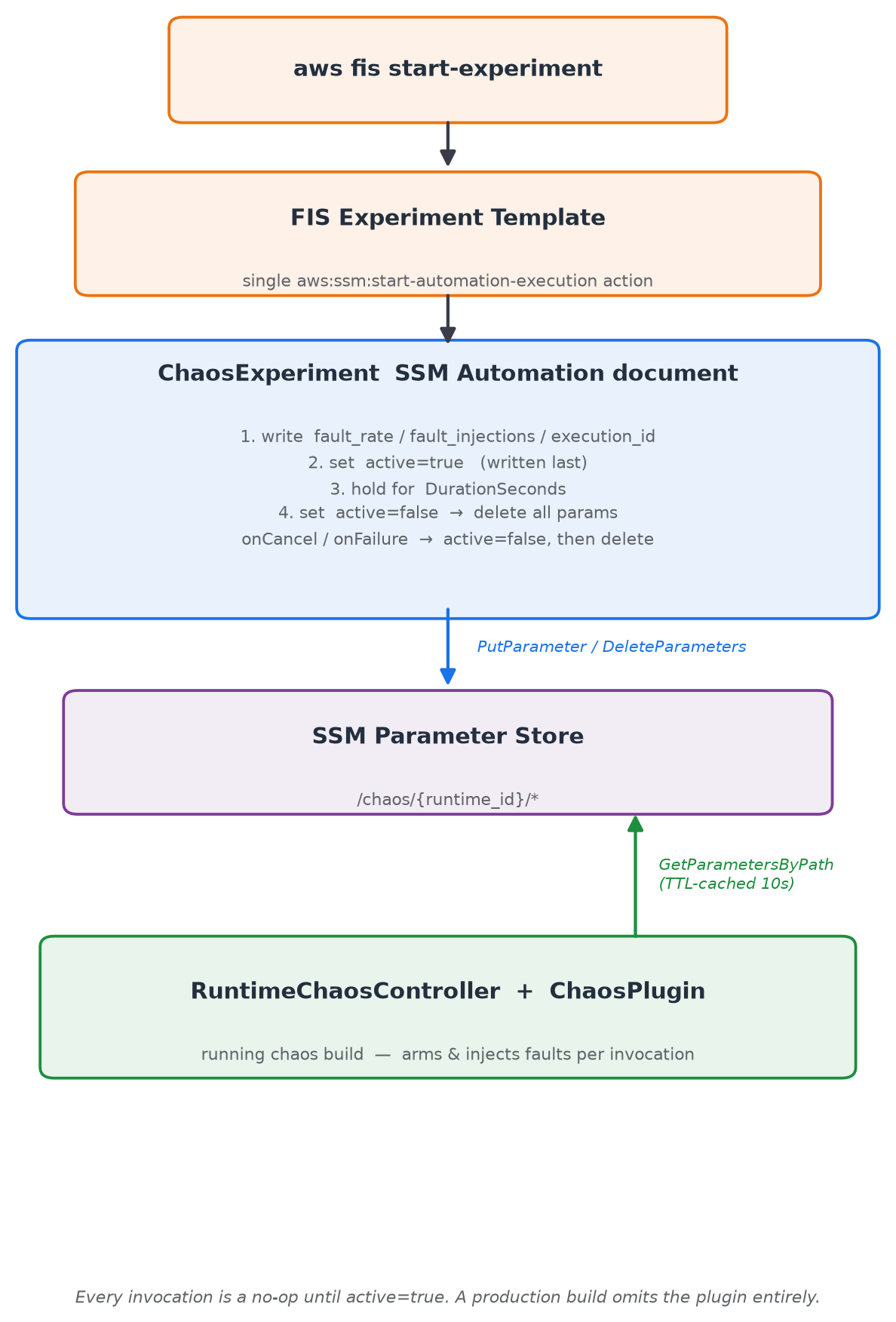
Resilience testing your agents on Amazon Bedrock AgentCore
0AWS Architecture Blog

Nvidia’s Earnings Calmed Markets, but AI’s Harsh Reckoning Marches On
0CNET News

Fubo’s Pro and Elite Subscribers Now Get the Disney Plus and Hulu Bundle Free
0CNET News

Orbin' with Amp
0The Changelog

AMD’s Twitter brag that it ‘loves gamers’ met with savage Community Note
0Tom's Hardware

Zane Lowe shares Apple Music Radio audience numbers, recalls ‘crickets’ in the early days
09to5Mac