AI & ML
Compatible by Construction: Bottom-Up Nonlinear Model Reduction without Interface Bases
arXiv cs.NA0 views
arXiv:2611.17773v1 Announce Type: new Abstract: Nonlinear manifolds can provide compact representations of solutions to partial differential equations (PDEs), but generating training data and learning these representations on large domains remain costly. We present a bottom-up framework that reuses local nonlinear representations learned on a small training domain to solve larger PDE systems. A shared nonlinear decoder represents the full set of degrees of freedom owned by each subdomain, without separate interior and interface models. Each global degree of freedom has a unique owner, and local residuals directly use decoded state values from the corresponding neighboring subdomains. The resulting discrete state is single-valued by construction, eliminating the need for independent interface copies and additional interface compatibility constraints. Physical coupling is retained through the original time-discrete PDE residual. With the decoder held fixed, the subdomain-specific reduced coordinates are determined jointly by minimizing this residual, and the Gauss--Newton system is assembled from local contributions. Experiments on parameterized viscous Burgers and incompressible Navier--Stokes problems demonstrate reuse on larger domains without retraining. Comparisons with local proper orthogonal decomposition models under the same coupling construction show favorable accuracy--efficiency trade-offs in the tested regimes.
Source:https://arxiv.org/abs/2611.17773PreviousConvergence analysis of physics-informed neural networks for subdiffusionNextA narrow band method for non-causal discretizations of anisotropic eikonal equations, with adaptive width, sub-and super-solution construction, and quasi-linear complexity
Related posts

An LLM confidence score isn’t correctness: the certainty trap
0dev.to

What a host-side layer for LLM agents is, in plain words (and what it is not)
0dev.to

OpenAI's Agents API Lets Any App Rent Codex, Here's How It Works
0dev.to
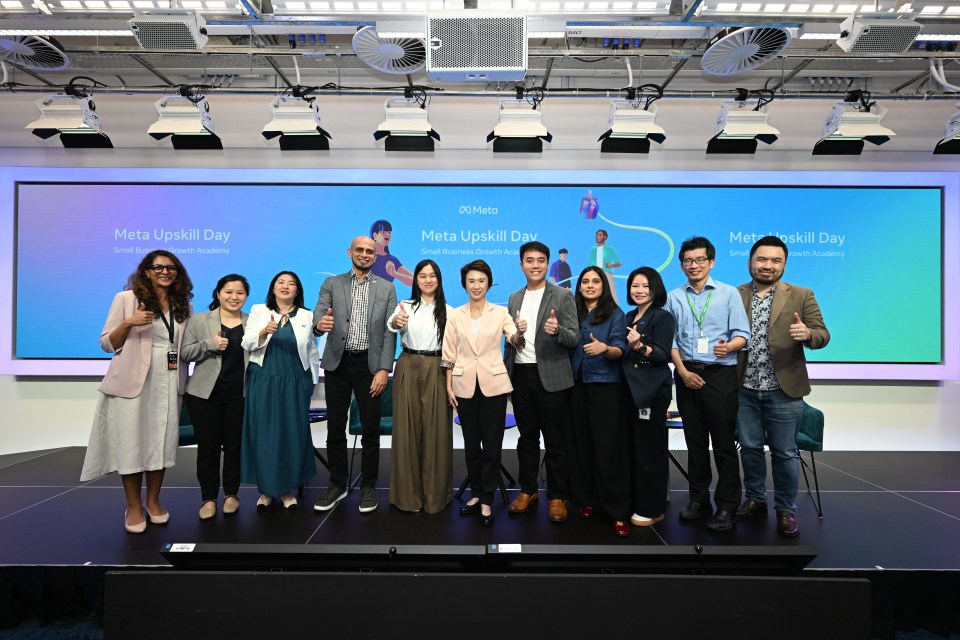
94% of Singapore Small Business Owners Surveyed Say More AI Guidance Is Needed
0Meta Newsroom

Nashville, Tennessee Real Estate Dataset: 7,436 Listings, Excel File (Nov 10, 2026)
0dev.to Data

A Hundred and Eighty Six Thousand Pounds of Stock Had Left One Branch and Never Arrived at Another
0dev.to Data