AI & ML
Neyman Orthogonalized Specification Tests for Conditional Tail Index Models
arXiv stat.TH0 views
arXiv:2611.07219v1 Announce Type: new Abstract: We develop specification tests for parametric conditional tail index models of heavy-tailed distributions. The tests are based on a projected empirical process that removes the first-order effect of estimating the null parameter. Within the conditional Hall class, we identify conditions under which projection also eliminates the leading Pareto approximation bias in the test process, permitting lower thresholds while preserving asymptotically correct size. We establish the validity of the tests via multiplier bootstrap. For log-linear models, bootstrap validity extends to settings in which covariates among observations above a common threshold concentrate and the smallest eigenvalue of the information matrix tends to zero. We further propose a data-driven threshold selection rule based on an estimate of the Pareto approximation bias after projection. The rule allows lower thresholds to retain more observations for testing while limiting size distortions, with potential gains in power. The finite sample performance of the tests is examined through simulations and a real data application.
Source:https://arxiv.org/abs/2611.07219PreviousWhere Does Retrieval-Based Open-Ended Evaluation Fail? Automatic Taxonomy Induction from Long-Form Medical Answer Factuality VerificationNextA Partial-Matching Proof of the Neyman--Pearson Lemma
Related posts

What your homepage looks like to Google and AI crawlers: a 20-minute checklist
0dev.to
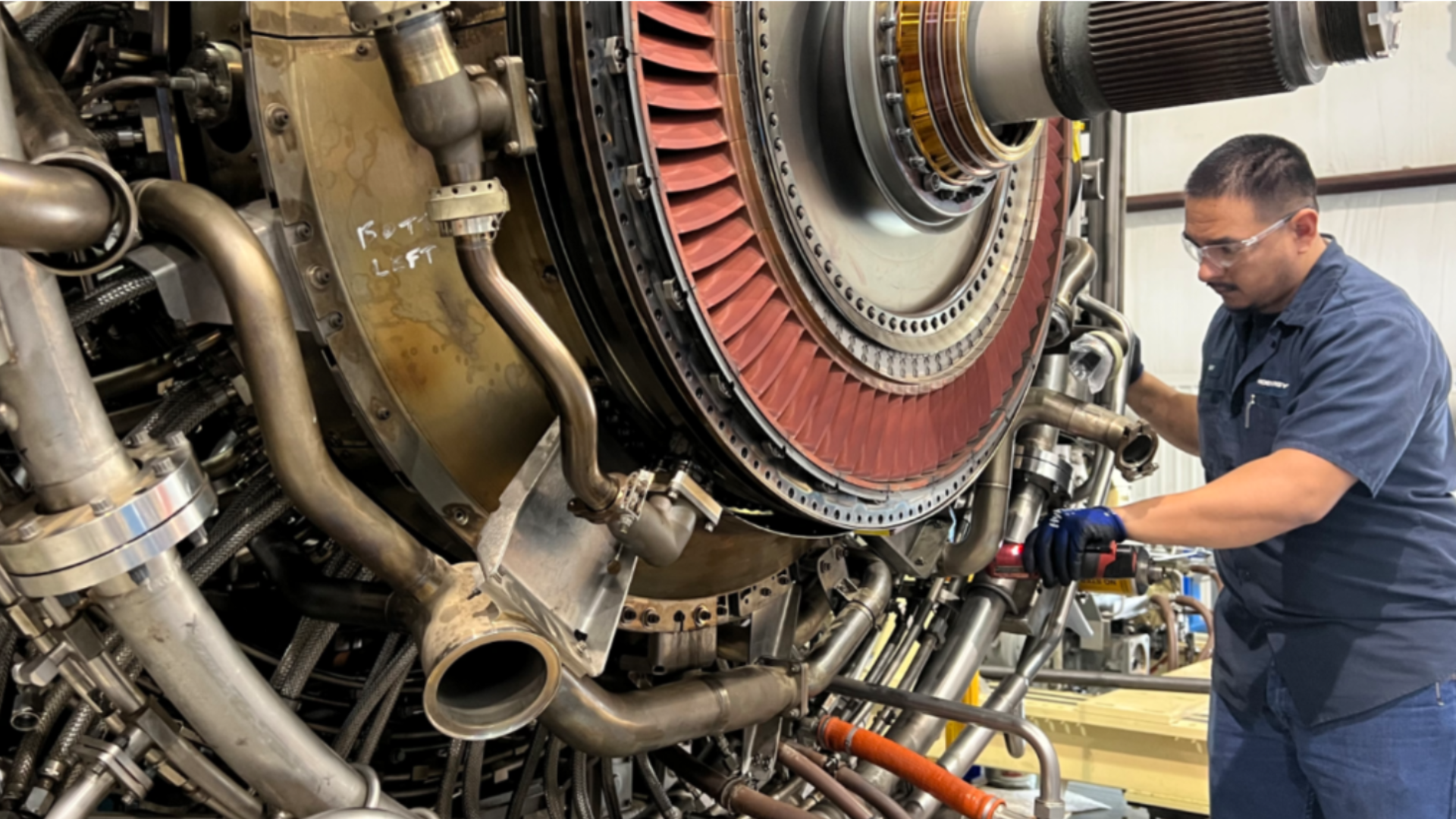
Data center providers are turning to old jet engines to power their output — Elon Musk's xAI installs eight converted engines for a major boost
0TechRadar

What an AI Agent Payment Authorization Actually Authorizes
0dev.to

OpenAI valued at $1.25 trillion, as rival Anthropic nears its IPO
0The Verge

Ships loiter near subsea cables amid Iran's warnings to Trump
0Ars Technica

Man unexpectedly recovers from a knife wound through his eye and brain
0Ars Technica