AI & ML
Data-Driven Configuration of Protective Separation Zones in Collaborative Robot Cells from Operator Occupancy
arXiv cs.RO0 views
arXiv:2611.07621v2 Announce Type: replace Abstract: The protective separation zone of a collaborative robot cell is commonly dimensioned for a worst case that disregards where the operator is actually present during the task. This paper presents a camera-based, data-driven method that configures this zone from observed operator occupancy. Operator positions accumulated over several production shifts are aggregated into an occupancy heatmap, from which a protective field is derived that trades off the achievable robot velocity against the required safety distance, following the speed and separation monitoring principle of ISO/TS 15066. The resulting configuration is advisory, that is, reviewed within the risk assessment rather than applied autonomously to the robot controller. The method, which builds on a pose-based perception pipeline with activity recognition, was evaluated in two operational cells at two industrial partners, where the protective field could be reduced by approximately 17% and a productivity increase of 9% was measured. However, adoption proved to depend on more than the demonstrated gain alone.
Source:https://arxiv.org/abs/2611.07621PreviousVLALagBench: Understanding When and Why VLA Inference Latency MattersNextMOSU2: Long-range Navigation System with Multi-modal Scene Understanding
Related posts

Darwin-Prediction-Weather: Korean AI Model Beats ECMWF, NOAA, and 6 Other Forecast Models Across 28 Benchmark Categories
0dev.to OpenSource

Your use case is not in the benchmarks
0dev.to Programming

Gemini Notebook transforma materiais de estudo em sites interativos
0dev.to Programming

How to Identify Missing Information in Construction Drawings
0dev.to JavaScript

Agenvoy@v1.3.17
0dev.to Go
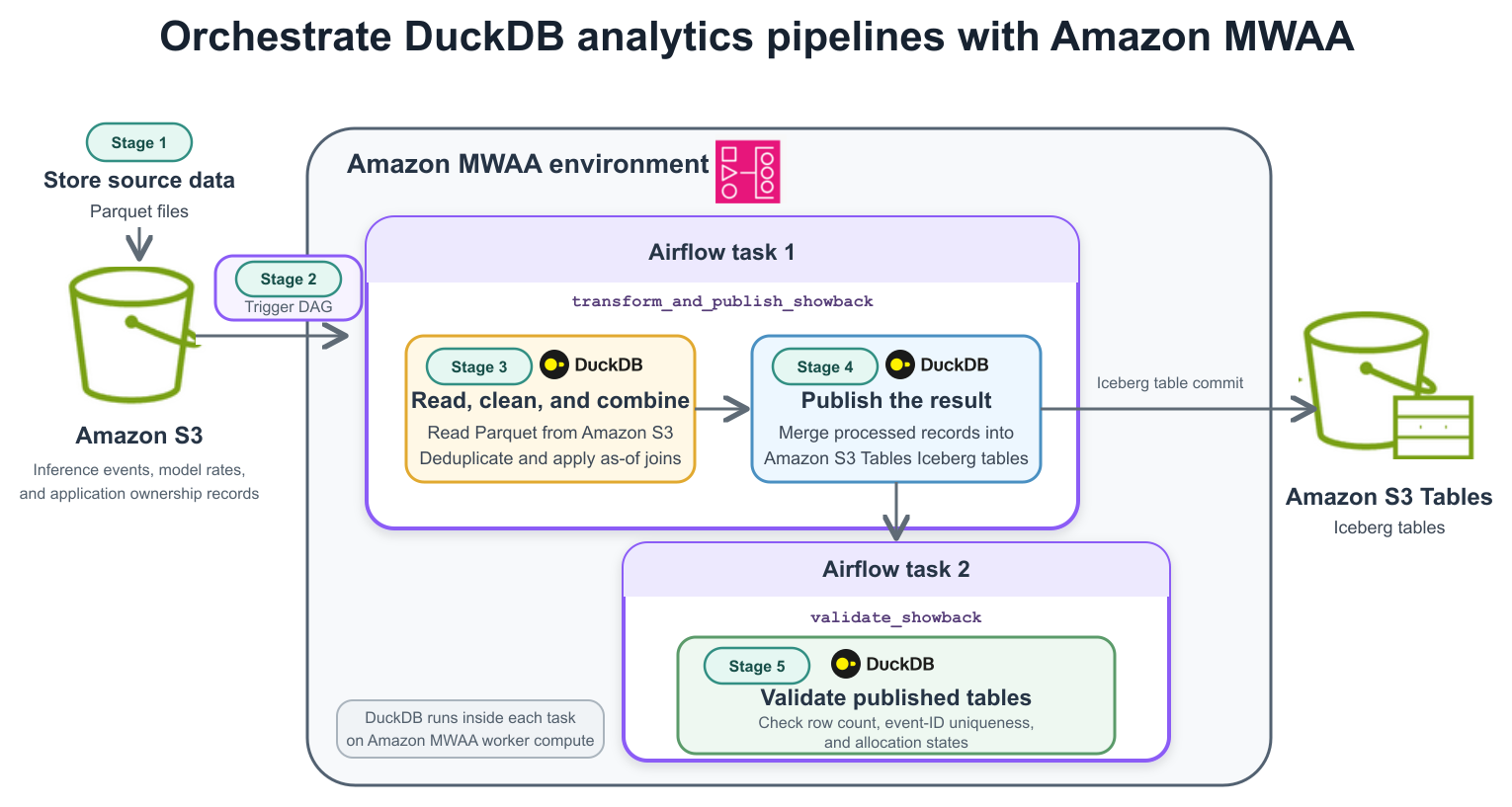
Orchestrate DuckDB analytics pipelines with Amazon MWAA
0AWS Big Data Blog