AI & ML
VLALagBench: Understanding When and Why VLA Inference Latency Matters
arXiv cs.RO0 views
arXiv:2611.03103v2 Announce Type: replace Abstract: Vision-language-action (VLA) models offer a promising path toward general-purpose robot manipulation. While inference latency can affect task success in a constantly evolving physical world, the relationship between latency and task success rate remains poorly understood. In this paper, we introduce VLALagBench, a comprehensive benchmark for studying VLA inference latency sensitivity across task types, object speeds, execution modes (synchronous and asynchronous), and VLA policies. Using VLALagBench, we find that even a modest inference latency of 100 ms can nearly halve task success on moving targets, with sensitivity varying substantially across tasks and policies. These differences reflect task-specific requirements for precision and continuous motion. By overlapping inference with action execution, asynchronous execution can recover some of the lost success at the cost of more frequent inference requests. Building on these findings, we develop an empirical model that predicts task success from limited calibration data, achieving root-mean-square prediction errors of only 5.7-7.8% across various VLA policies. Given an inference system's latency and per-robot throughput, these predictions guide the selection of system-specific VLA algorithm configurations to maximize task success. We believe VLALagBench and these findings provide a solid foundation for future robotics algorithm-system co-design.
Source:https://arxiv.org/abs/2611.03103PreviousLinear Recurrent Memory Suffices to Distil a World-Model Policy for Robot Air HockeyNextData-Driven Configuration of Protective Separation Zones in Collaborative Robot Cells from Operator Occupancy
Related posts

Darwin-Prediction-Weather: Korean AI Model Beats ECMWF, NOAA, and 6 Other Forecast Models Across 28 Benchmark Categories
0dev.to OpenSource

Your use case is not in the benchmarks
0dev.to Programming

Gemini Notebook transforma materiais de estudo em sites interativos
0dev.to Programming

How to Identify Missing Information in Construction Drawings
0dev.to JavaScript

Agenvoy@v1.3.17
0dev.to Go
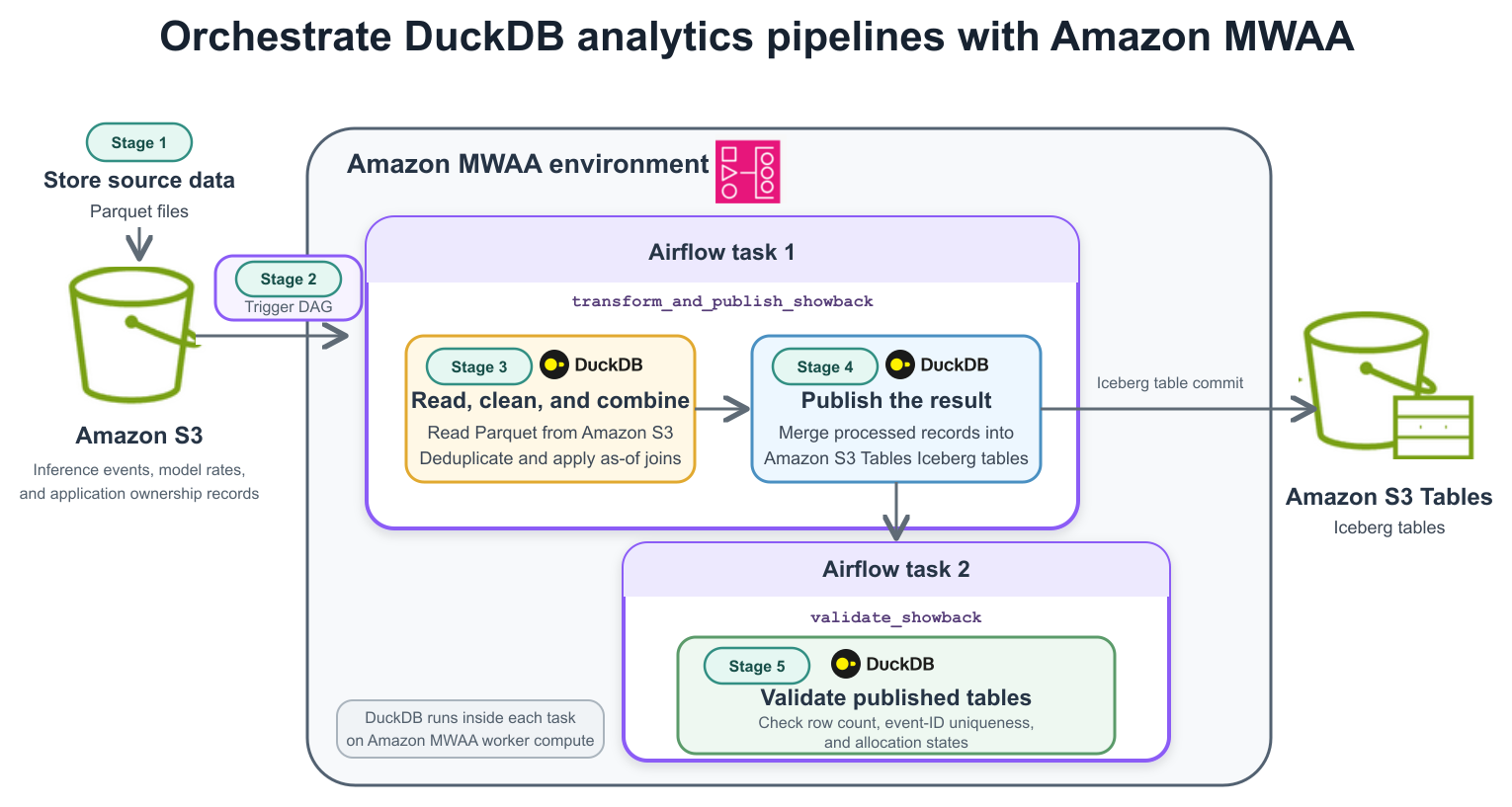
Orchestrate DuckDB analytics pipelines with Amazon MWAA
0AWS Big Data Blog